 EN
EN
 ko
ko  vi
vi  ru
ru  tr
tr  fr
fr  es
es  it
it  kk
kk  id
id 
Tel:
0086-523-848088860086-18861028088


Choosing between a decanter centrifuge, basket centrifuge, and pusher centrifuge is not simply a matter of comparing machine size or motor power. In real production, the right choice depends on feed consistency, particle behavior, required cake moisture, washing needs, discharge method, automation level, and whether the process is batch or continuous.
A centrifuge is a separation machine that uses centrifugal force to accelerate the movement of solids and liquids with different densities, helping manufacturers separate, clarify, wash, or dewater process materials more efficiently than gravity settling alone.
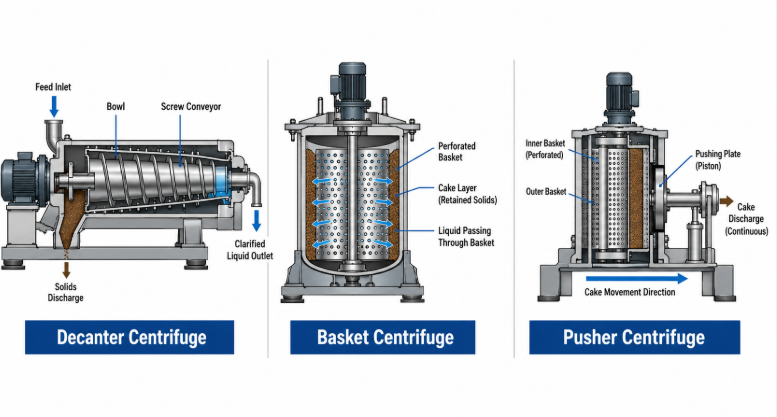
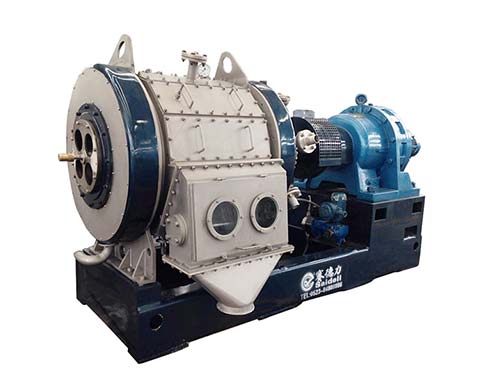
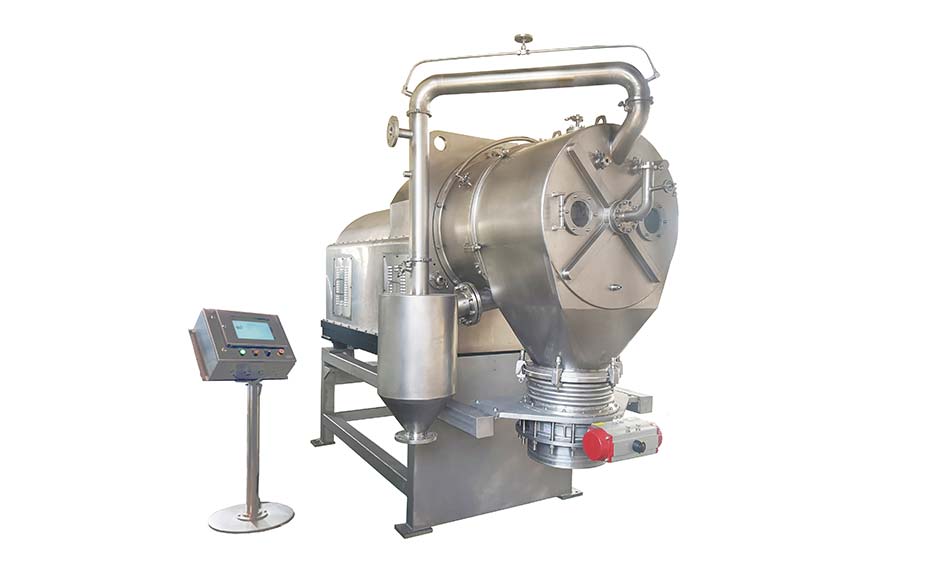
The main difference is how each machine separates solids and liquids, and how it discharges the separated solids. A decanter centrifuge usually works by sedimentation. The suspension enters a rotating bowl, solids settle on the bowl wall under centrifugal force, and a screw conveyor moves the solids toward the discharge end. It is often selected for continuous separation of slurries, sludge, and fine suspended solids.
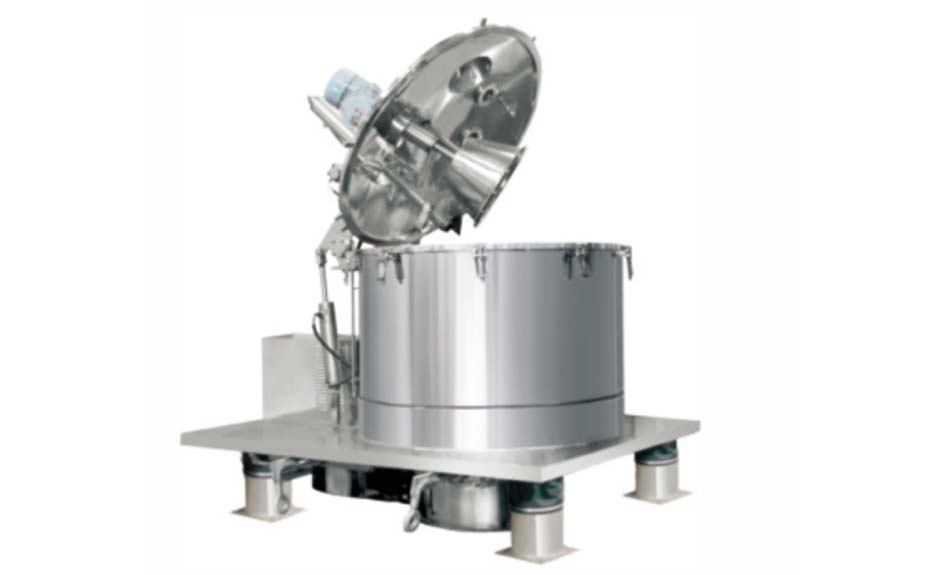
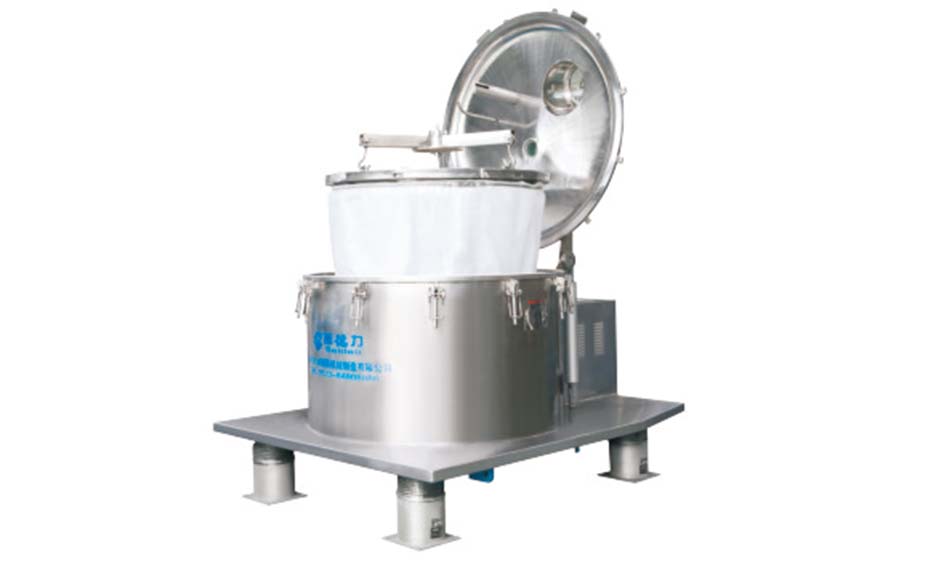
A basket centrifuge usually works by filtration. The liquid passes through a filter medium or perforated basket, while solids are retained as a cake. Depending on the structure, the solid cake may be discharged manually, by scraper, by bag lifting, or through a bottom discharge system. This makes the basket centrifuge suitable for many batch processes where washing and cake control matter.
A pusher centrifuge is also a filtration centrifuge, but it is designed for continuous solid discharge. Materials enter the inner basket, the liquid passes through the screen, and the solids form a cake layer that is pushed forward step by step. It is commonly used when crystalline or granular materials need continuous separation with stable feed conditions.
The practical takeaway is simple: a decanter centrifuge favors continuous sedimentation, a basket centrifuge favors batch filtration and washing flexibility, and a pusher centrifuge favors continuous filtration of free-draining solids.
A decanter centrifuge is often chosen when the process requires continuous feeding, continuous liquid discharge, and continuous solids removal. In this design, the rotating bowl creates high centrifugal force, while the internal screw conveyor moves sedimented solids along the bowl. The clarified liquid exits separately, allowing the machine to run without stopping for every discharge cycle.
This structure makes decanter centrifuges especially useful for slurries where solids can settle under centrifugal force. Saideli’s LW Decanter Centrifuge is described for separating solid-liquid suspensions, clarifying liquid phases with graded grains, and dewatering sludge. Its application examples include chemical materials, pigments, ore, clay, kaolin, starch, proteins, syrup, beverage, vegetable oil, citric acid, wastewater, drilling mud, and other slurry systems.
For buyers comparing suppliers, it is useful to discuss materials and performance targets with an experienced decanter centrifuge manufacturer rather than selecting only by bowl diameter. According to Saideli’s published LW specification table, the processing capability ranges from 0.5–3 m³/h for smaller models to 50–120 m³/h for larger models. These numbers show why capacity should be matched to both feed volume and solids behavior, not only to the machine model name.
A decanter centrifuge may be the right choice when the feed is pumpable, the process runs for long hours, the solids can be conveyed by screw, and the main goal is continuous clarification or sludge dewatering. However, it may not be ideal when the product requires delicate crystal handling, intensive cake washing, or extremely low cake moisture that depends on filtration cake structure.
A basket centrifuge is often used when the buyer needs more control over each process step: feeding, filtration, washing, spinning, discharge, and cleaning. Compared with a decanter centrifuge, a basket design can give operators more flexibility to adjust cake thickness, washing time, spin time, and discharge timing.
This is why basket centrifuges are widely used in pharmaceutical, chemical, fine chemical, food, and starch-related production. If the product is valuable, sensitive, or needs controlled washing, a batch basket centrifuge may be easier to validate and adjust than a fully continuous system.
The basket structure may be vertical, horizontal, top suspended, bottom discharge, scraper discharge, or bag lifting. A perforated basket centrifuge retains solids on the basket wall while liquid passes through the filter medium and perforations. The final selection depends on particle size, filtration resistance, cake release behavior, cleaning expectations, and whether the operator wants manual or automatic discharge.
For buyers searching for a centrifuge basket for sale, these points are important because the basket itself is only one part of the separation result; the drive system, scraper group, housing, bearing seat, and discharge design also affect operation.
A basket centrifuge may be the right choice when the process is batch-based, the product cake needs washing, the material can form a filterable cake, and discharge cleanliness matters. It may be less suitable when the plant requires fully continuous operation with very high feed flow and no batch interruption.
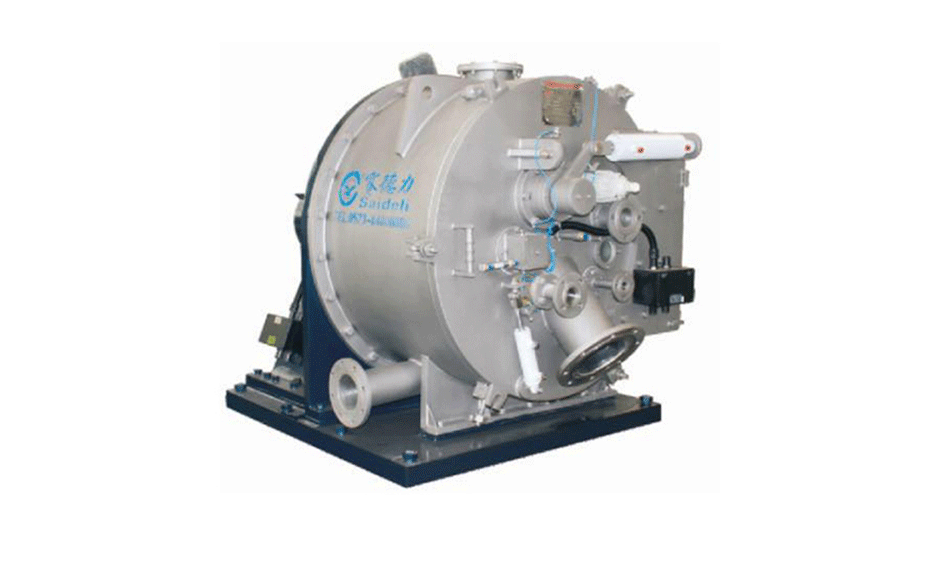
A pusher centrifuge is designed for continuous filtration of solids that can form a stable cake and move forward under repeated pushing action. It is commonly used for crystalline or granular materials where the solid cake is strong enough to be transported without excessive breakage.
Saideli’s HR Pistons Pushing Centrifuge is described as a horizontal two-stage pistons pushing centrifuge and filtering centrifuge with continuous operation. Materials are fed continuously through the feeding pipe and distributed evenly on the inner drum wall. Under centrifugal force, liquid drains through the filtering net and drum wall holes, while solids are intercepted and form a cake ring. The pushing mechanism then moves the solid cake forward for continuous discharge.
This is different from a batch basket centrifuge, where the machine may need to stop or complete a cycle before discharge. A pusher centrifuge is usually selected when the feed is stable, the particles are relatively free-draining, and the plant needs continuous capacity. According to Saideli’s HR model table, production capacity ranges from 1–8 t/h for smaller models to 18–50 t/h for larger models. That capacity range makes pusher centrifuges attractive for suitable bulk materials, but only when the crystal strength and filtration behavior are appropriate.
When evaluating a pusher centrifuge manufacturer, buyers should discuss particle breakage, screen opening, cake thickness, feed stability, mother liquor drainage, washing requirement, and expected solids discharge condition. A pusher centrifuge can perform well in the right process, but it is not a universal replacement for all basket or decanter designs.
| Comparison Item | Decanter Centrifuge | Basket Centrifuge | Pusher Centrifuge |
|---|---|---|---|
| Main Separation Principle | Sedimentation in a rotating bowl | Filtration through basket, screen, or filter cloth | Continuous filtration through screen basket |
| Operation Mode | Continuous | Mostly batch or automatic cycle | Continuous |
| Best Fit Materials | Pumpable slurries, sludge, fine suspended solids | Filterable solids, crystals, products needing washing | Free-draining crystalline or granular solids |
| Solid Discharge | Screw conveyor discharge | Manual, scraper, bag lifting, top or bottom discharge | Pushing mechanism moves cake continuously |
| Washing Flexibility | Limited compared with batch filtration | High flexibility for batch washing | Possible, but depends on cake movement and residence time |
| Moisture Control | Good for sludge and continuous dewatering | Good when cake filtration and spin time are controlled | Good for suitable free-draining solids |
| Typical Buyer Concern | Clarified liquid quality, solids dryness, screw wear | Cake release, cleaning, filter medium, discharge method | Crystal breakage, screen life, feed stability, discharge continuity |
| Suitable When | The process needs long continuous running | The process needs batch control and washing | The process needs continuous filtration of stable crystals |
There is no single winner in this comparison. The better choice depends on the production problem. If the liquid clarity and continuous sludge removal matter most, the decanter centrifuge may be preferred. If product washing, cake control, and cleaning access matter most, the basket centrifuge is often more suitable. If the material is crystalline, free-draining, and produced continuously, the pusher centrifuge may offer a stronger fit.
The first selection factor is material behavior. A decanter centrifuge works well when the solids can sediment and be conveyed. A basket centrifuge works well when solids form a filterable cake. A pusher centrifuge works well when the cake can move continuously without breaking down into fines.
The second factor is residual moisture. If your target is simply to reduce water from sludge, a decanter may be practical. If you need careful dehydration after washing a valuable solid product, a batch basket centrifuge may offer better control. If the product is a large-volume crystal with predictable filtration behavior, a pusher centrifuge can reduce interruption between batches.
The third factor is capacity. Buyers sometimes compare only the largest number in a specification table, but a real project should consider feed concentration, solids content, required washing, discharge condition, and operating hours.
The fourth factor is cleaning and compliance. In pharmaceutical and fine chemical production, the U.S. eCFR states that drug manufacturing equipment and utensils should be cleaned, maintained, and, where appropriate, sanitized or sterilized at suitable intervals to prevent contamination or quality changes. This is why equipment structure, cleanability, residue removal, and access for inspection can matter as much as capacity.
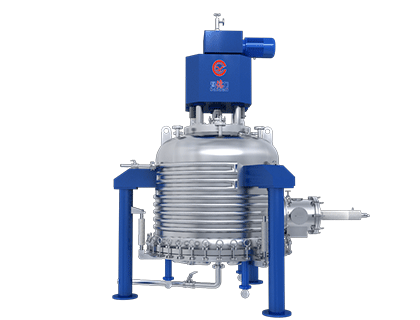
The fifth factor is whether an alternative centrifuge type should be reviewed. For example, a horizontal scraper centrifuge may be considered when the material is difficult to filter, requires automatic peeling, or benefits from siphon-assisted filtration.
One common mistake is treating all centrifuge types as interchangeable. A decanter centrifuge, basket centrifuge, and pusher centrifuge may all perform solid-liquid separation, but they do not solve the same production problem. Choosing the wrong structure can lead to high moisture, unstable discharge, screen blockage, crystal damage, or excessive downtime.
Another mistake is focusing too much on motor power or machine size. A larger machine is not automatically better. If the cake cannot release from the filter medium, if the screw conveyor cannot handle the solids, or if the particles break during pushing, the process may fail even when the machine looks powerful.
A third mistake is ignoring feed variability. Continuous machines need stable feed conditions. If the slurry concentration, crystal size, or viscosity changes frequently, a batch machine with adjustable cycle steps may sometimes be safer than a continuous machine.
A fourth mistake is underestimating washing requirements. Product washing can be more important than simple dewatering in pharmaceutical, chemical, and food-related processes. If washing is critical, buyers should discuss wash distribution, residence time, cake thickness, filtrate removal, and possible re-slurrying with the manufacturer.
A fifth mistake is comparing capacity figures without context. One supplier may quote feed volume, another may quote wet solids capacity, and another may quote dry product output. These numbers are not equal. A serious inquiry should include feed concentration, particle size, expected moisture, washing ratio, operating time, and discharge condition.
A decanter centrifuge is usually better for continuous sedimentation and sludge-type separation. A basket centrifuge is often better for batch filtration, washing, and controlled cake handling. A pusher centrifuge is suitable for continuous separation of stable crystalline or granular solids. The best choice should be confirmed by material data, process targets, moisture requirements, cleaning needs, and capacity expectations.
Is a decanter centrifuge better than a basket centrifuge?
Not always. A decanter centrifuge is better for continuous sedimentation and sludge dewatering, while a basket centrifuge is often better for batch filtration, cake washing, and controlled discharge of solid products.
When should I choose a basket centrifuge?
Choose a basket centrifuge when the material can form a filterable cake and the process needs batch control, washing flexibility, cake inspection, or cleaner discharge. It is common in chemical, pharmaceutical, food, and starch-related processes.
What materials are suitable for a pusher centrifuge?
A pusher centrifuge is usually suitable for crystalline or granular solids that are free-draining, mechanically stable, and supplied at a consistent feed rate. Materials that are too fine, sticky, or fragile may require another centrifuge type.
Can a decanter centrifuge handle fine particles?
Yes, a decanter centrifuge can handle many fine suspended solids, especially when the solids can sediment under centrifugal force. However, final clarity and dryness depend on particle size, density difference, viscosity, bowl speed, and differential speed.
What is a perforated basket centrifuge?
A perforated basket centrifuge uses a basket with holes or screen openings. Liquid passes through the filter medium and perforations, while solids remain inside the basket and form a cake layer for washing, spinning, and discharge.
How should I compare centrifuge types before buying?
Compare them by material behavior, operation mode, residual moisture target, washing requirement, discharge method, cleaning standard, safety requirement, and real production capacity. Avoid choosing only by price, diameter, or motor power.
Wikipedia: Centrifugation — background explanation of centrifugal force, RCF, and particle separation behavior.
eCFR 21 CFR § 211.67 — equipment cleaning and maintenance requirements for pharmaceutical manufacturing.