 EN
EN
 ko
ko  vi
vi  ru
ru  tr
tr  fr
fr  es
es  it
it  kk
kk  id
id 
Tel:
0086-523-848088860086-18861028088


A sludge dewatering centrifuge removes water from sludge by using centrifugal force to separate denser solids from the liquid phase. In wastewater treatment, the objective is not simply to produce the driest possible cake; the equipment must also provide stable solids capture, manageable polymer consumption and sufficient capacity for the plant's actual sludge load.
This is why selecting a sludge centrifuge should begin with feed characteristics. Primary sludge, waste activated sludge, digested sludge and industrial wastewater solids can behave very differently even at the same feed rate.
For engineering and procurement teams, the correct decanter is therefore selected by solids loading, hydraulic capacity, particle behavior and required downstream handling—not by bowl diameter alone.
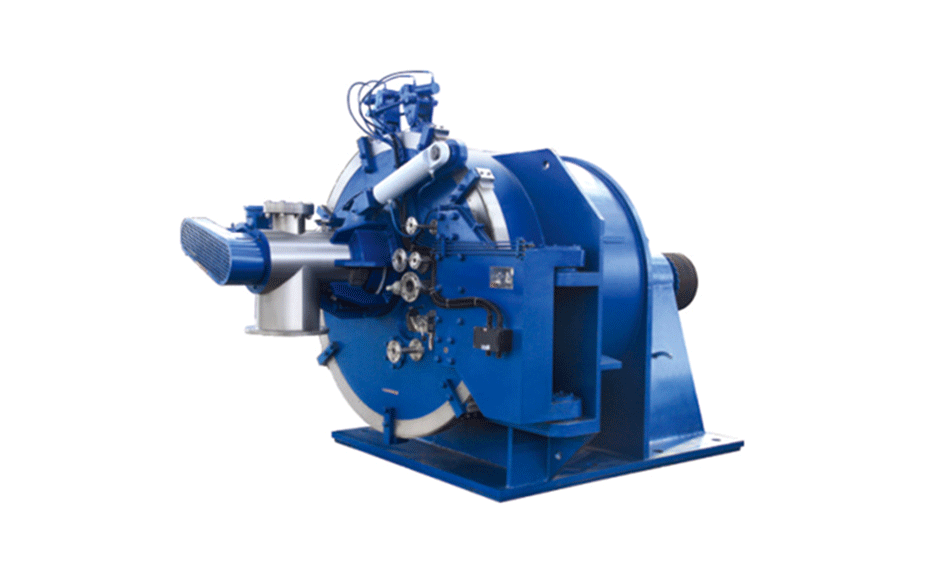
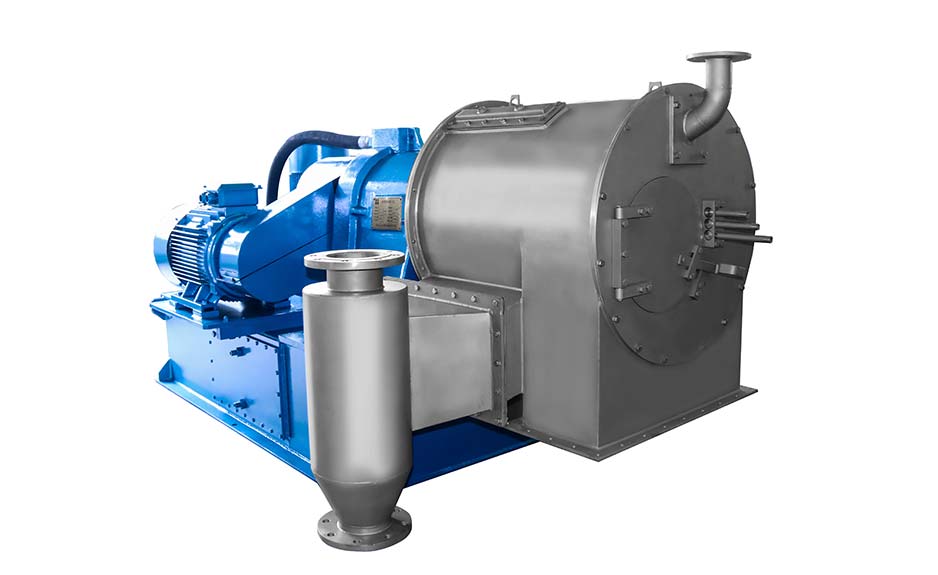
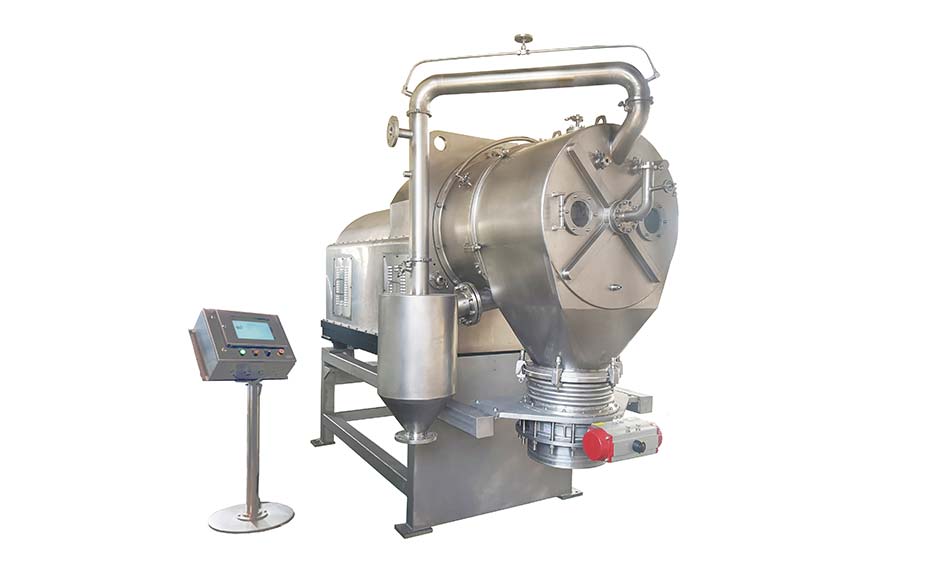
A sludge dewatering centrifuge is a solid-bowl separation machine that concentrates suspended solids into a dewatered cake while discharging the separated liquid as centrate.
In wastewater applications, continuous horizontal decanter centrifuges are widely used because they can receive sludge continuously and discharge both solids and liquid without a filter cloth.
The U.S. EPA describes centrifugal thickening and dewatering as a high-speed process in which rapid bowl rotation separates wastewater solids from liquid, producing a non-liquid material called cake. The technology has been used in wastewater treatment since the 1930s.
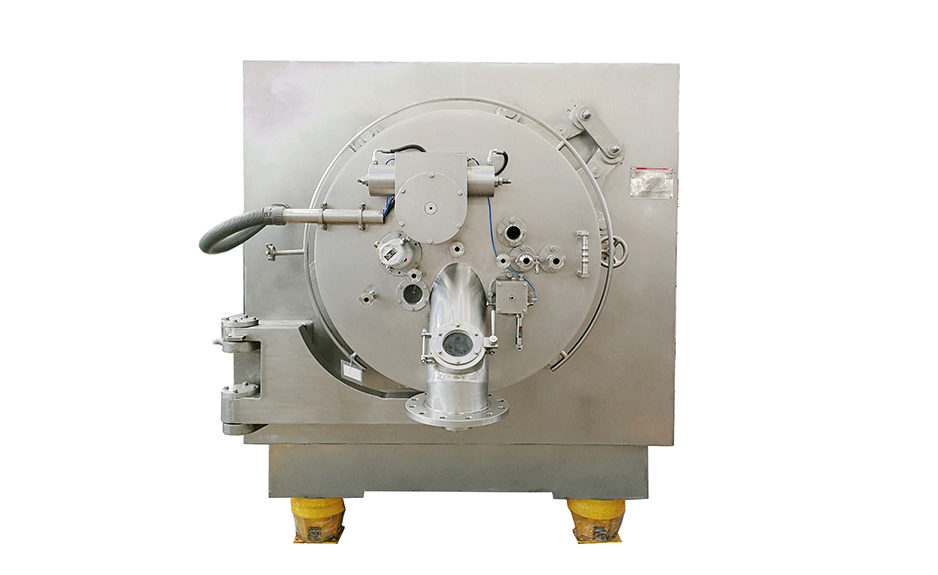
Saideli's sludge dewatering centrifuge solutions apply this sedimentation principle to industrial solid-liquid separation applications where continuous processing and enclosed operation are required.
The main benefit of dewatering is volume reduction. Removing water lowers the amount of material that must be transported, stored, dried or disposed of.
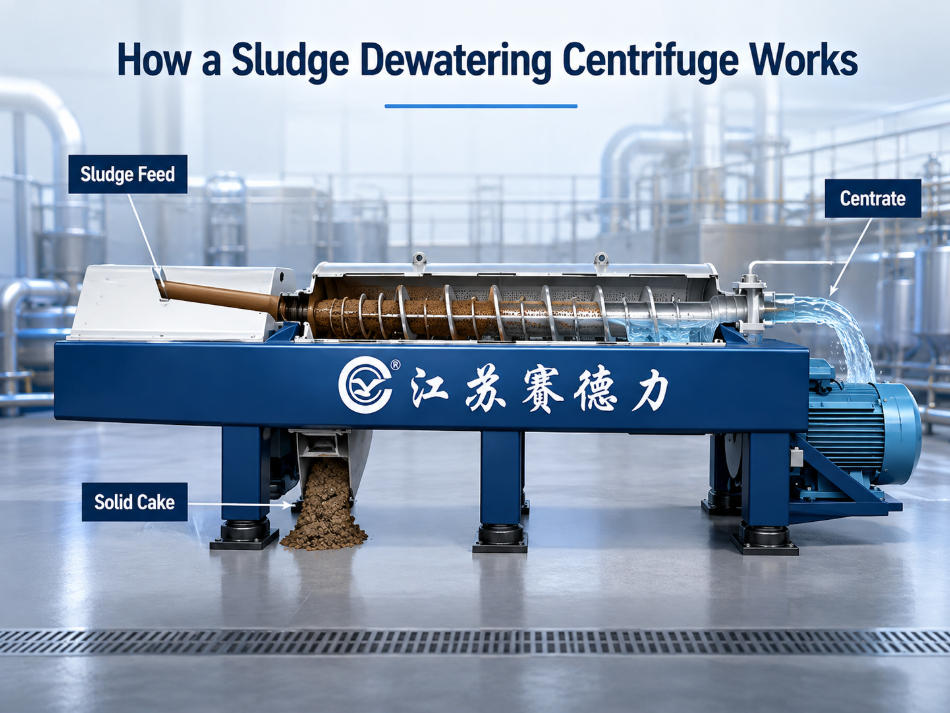
A decanter centrifuge dewaters sludge by rotating the feed at high speed so denser solids settle against the bowl wall while a screw conveyor continuously moves them toward the solids discharge.
Sludge enters through the feed pipe and is accelerated inside the rotating bowl. Because solids have greater density than the liquid phase, they move outward and form a sediment layer along the bowl wall. The clarified liquid remains closer to the rotational axis and exits through adjustable liquid outlets.
Inside the bowl, the screw conveyor rotates at a slightly different speed from the bowl. This differential speed transports settled solids toward the conical beach, where additional liquid drains before the cake is discharged.
The basic principle is simple, but performance depends on the interaction between bowl speed, differential speed, pond depth and feed properties.
Saideli's LW series illustrates the available operating range. Depending on model, its published bowl diameters extend from 250 to 1,000 mm, with processing capacities from approximately 0.5–3 m³/h up to 50–120 m³/h.
For projects evaluating equipment, a qualified decanter centrifuge manufacturer should therefore request process data before recommending a machine size.
The key selection parameters for a sludge dewatering centrifuge are feed solids concentration, solids loading, required cake dryness, solids capture, flow rate and sludge characteristics.
| Parameter | Why It Matters |
|---|---|
| Feed flow, m³/h | Determines hydraulic capacity |
| Feed solids, % | Determines actual solids load |
| Solids load, kg DS/h | More useful than flow alone for sizing |
| Particle characteristics | Affect settling and capture |
| Target cake solids | Influences beach and operating settings |
| Solids capture | Determines centrate quality and solids loss |
| Polymer requirement | Influences operating cost |
| Operating hours | Determines required hourly capacity |
The distinction between hydraulic capacity and solids capacity is particularly important. Two plants may each feed 20 m³/h, but a sludge containing 1% solids places a very different load on the machine from sludge containing 5%.
EPA guidance reports that properly operated solid-bowl dewatering systems can achieve solids capture in the range of roughly 90–98%, although real performance varies significantly with sludge conditioning and operating conditions.
Therefore, machine capacity should never be selected from flow rate alone

Centrifuge capacity should be calculated from both volumetric feed and dry-solids loading so the machine can handle peak conditions without sacrificing separation performance.
A useful starting calculation is:
Dry solids load = Feed flow × sludge concentration
For example, 20 m³/h of sludge at 3% solids contains approximately 600 kg of dry solids per hour, assuming a sludge density close to water for preliminary estimation.
The selected dewatering centrifuge must handle both 20 m³/h hydraulically and approximately 600 kg DS/h from a solids perspective.
Plants should also consider peak rather than average conditions. If sludge production changes between shifts or seasons, sizing only around the daily average can produce overload during peak dewatering periods.
Operating schedule matters as well. A plant producing 12 tonnes of dry solids per day but operating its centrifuge only 8 hours requires substantially greater hourly capacity than a plant running dewatering continuously for 24 hours.
Pilot tests are useful when the sludge is difficult to settle or when polymer dose and cake dryness are critical to operating cost.
Different wastewater sludges require different centrifuge settings because biological, mineral and chemical solids differ in density, particle size and dewatering behavior.
Municipal activated sludge contains fine biological solids and bound water, making polymer conditioning particularly important. Digested sludge may behave differently because biological stabilization changes particle structure.
Industrial wastewater can vary even more. Printing and dyeing sludge, papermaking sludge, mineral slurry and chemical-process residues may have very different settling characteristics.
This is where application experience matters. Saideli's centrifuge chemical industry solutions address separation processes where sealing, material compatibility and hazardous media may also influence equipment design.
For broader centrifuge wastewater treatment applications, operators should also evaluate whether centrate will be returned to the treatment process. Poor solids capture can recycle a significant solids load back into the plant, reducing the benefit of producing a drier cake.
A centrifuge manufacturer needs representative feed and performance data to select bowl size, motor power and operating configuration accurately.
Before requesting a quotation, provide:
sludge source and composition;
feed flow in m³/h;
minimum, normal and maximum solids concentration;
particle size or settling information if available;
required cake solids or moisture;
required solids capture;
current polymer type and dosage;
operating hours per day;
temperature, pH and corrosive components;
installation and electrical requirements.
This information is more useful than simply requesting a “20 m³/h centrifuge.”
Saideli manufactures decanter equipment across chemical, environmental and process-industry applications. The strongest selection process is therefore one in which actual sludge data is matched to bowl geometry, separating factor and capacity before equipment is finalized.
Choosing a sludge dewatering centrifuge requires balancing hydraulic capacity, dry-solids load, cake dryness, solids capture and operating cost.
A larger machine is not automatically the best solution. Correct decanter selection begins with representative sludge characteristics and realistic peak loading. For centrifuge wastewater treatment, matching equipment performance to both the sludge and downstream handling requirements usually provides more value than focusing on flow capacity alone.
It separates water from sludge and produces a concentrated solids cake plus liquid centrate.
Yes, but biological sludge often requires appropriate polymer conditioning for effective capture and dewatering.
Both feed flow in m³/h and dry-solids loading in kg DS/h should be considered.
Sludge properties, bowl speed, pond depth, differential speed and polymer conditioning all influence cake solids.
It is the percentage of incoming solids retained in the dewatered cake rather than lost with the centrate.
Provide flow, solids concentration, sludge type, target cake dryness, solids capture, polymer use and operating schedule.