 EN
EN
 ko
ko  vi
vi  ru
ru  tr
tr  fr
fr  es
es  it
it  kk
kk  id
id 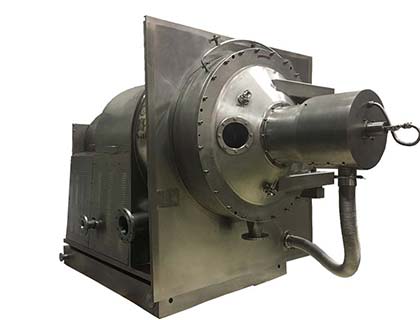
Tel:
0086-523-848088860086-18861028088


Buying an industrial centrifuge is not only a purchasing decision. It is a process engineering decision that affects separation efficiency, product quality, moisture control, operating safety, maintenance cost, and long-term production stability.
Many buyers begin by asking for price, but price alone cannot determine whether a centrifuge is suitable. A machine with a lower quotation may cause higher operating cost if it cannot reach the required capacity, moisture target, washing effect, or discharge stability. For chemical, pharmaceutical, food, environmental, and new energy production, the better approach is to evaluate material properties, process goals, machine type, supplier experience, and total cost of ownership.
This guide explains how to evaluate industrial centrifuge capacity, industrial centrifuge machine price, supplier capability, and key selection factors before purchase.
Before contacting an industrial centrifuge machine supplier, buyers should first define the production process. A centrifuge cannot be selected accurately without material and process information.
Important information includes:
· Material name and process stage
· Feed volume per hour or per batch
· Solid concentration
· Particle size distribution
· Liquid viscosity
· Product density
· Crystal fragility
· Corrosion or solvent risk
· Required final moisture
· Washing requirement
· Production mode: batch or continuous
· Automation requirement
· Cleaning and maintenance requirement
A clear process definition helps the supplier recommend the correct machine type instead of only offering a general centrifuge model.
Capacity is one of the most important buying factors. However, centrifuge capacity is not only determined by machine size. It is affected by material properties, filtration speed, washing time, cake thickness, discharge cycle, and target moisture.
Capacity Factor | How It Affects Performance | What Buyers Should Confirm |
Feed rate | Determines required throughput | Hourly or batch processing target |
Solid concentration | Affects cake formation and load | Percentage of solids in feed slurry |
Particle size | Influences filtration and settling speed | Particle size distribution data |
Liquid viscosity | Affects liquid removal speed | Process temperature and viscosity |
Cake thickness | Impacts washing and dewatering | Required cake depth and uniformity |
Washing time | Extends batch cycle if purity is required | Washing volume and impurity limit |
Final moisture | Determines dewatering requirement | Moisture target after centrifugation |
Discharge method | Affects cycle time and labor cost | Manual, scraper, pusher, or automatic discharge |
A larger centrifuge does not always guarantee better capacity. If the material filters slowly, sticks to the basket, or requires long washing time, the actual output may be lower than expected.
industrial centrifuge price varies widely because centrifuges are usually selected and configured according to process requirements. Buyers should compare not only the initial quotation but also long-term operation and maintenance costs.
1.Machine Type
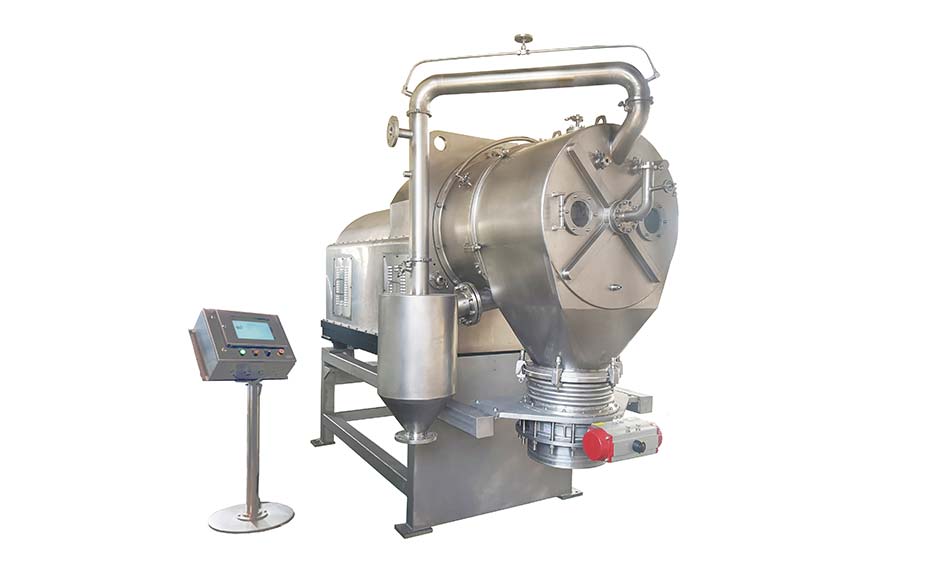
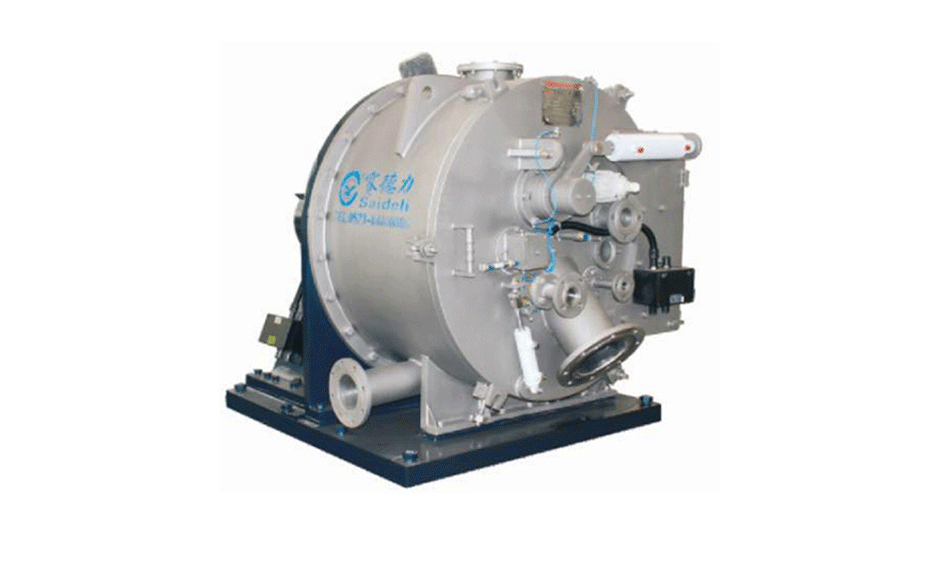
Pusher centrifuges, peeler centrifuges, basket centrifuges, decanter centrifuges, and inverting centrifuges have different structures and manufacturing costs.
2.Material Grade
Stainless steel grade, corrosion-resistant alloy, coating, and polishing level affect cost.
3.Automation Level
PLC control, automatic feeding, automatic washing, scraper discharge, vibration monitoring, and safety interlocks increase cost but reduce labor.
4.Sealing and Safety Design
Solvent, toxic, flammable, or pharmaceutical materials may require sealed, explosion-proof, or inert gas protection design.
5.Customization
Special dimensions, filter media, discharge structure, washing system, and clean-in-place design may increase price.
6.After-Sales Support
Installation, commissioning, spare parts, training, and service support also affect the total investment.
For buyers comparing industrial centrifuge cost, the lowest price is not always the best value. A more suitable machine can reduce downtime, lower moisture, improve product recovery, and save downstream drying cost.
Cost Item | Low Initial Price Risk | Long-Term Evaluation Focus |
Equipment price | May hide weak configuration | Compare structure, material, and automation |
Energy consumption | High-speed equipment may consume more power | Evaluate efficiency and operating cycle |
Spare parts | Low-cost parts may wear quickly | Confirm availability and replacement cost |
Filter cloth or screen | Frequent replacement increases downtime | Check service life and compatibility |
Maintenance | Poor design increases labor | Evaluate accessibility and maintenance schedule |
Product loss | Poor discharge leaves residue | Confirm discharge completeness |
Moisture control | High moisture increases drying cost | Check final moisture performance |
Downtime | Unstable operation reduces output | Evaluate supplier service capability |
This total-cost view is especially important for buyers sourcing a commercial centrifuge machine for continuous production.
Choosing the right supplier is as important as choosing the right machine. A qualified supplier should understand both equipment design and separation process.
A reliable industrial centrifuge suppliers team should provide:
· Material analysis support
· Model selection guidance
· Custom design capability
· Manufacturing quality control
· Process testing or pilot test support
· Clear technical drawings
· Automation and control system explanation
· Installation and commissioning service
· Spare parts support
· Maintenance training
When comparing suppliers, buyers should ask whether the supplier has experience with similar materials and industries.
Chemical production often requires corrosion resistance, explosion-proof design, solvent sealing, and continuous operation. Buyers may need pusher centrifuges, peeler centrifuges, or basket centrifuges depending on material behavior.
A pusher centrifuge manufacturer is usually evaluated based on experience with continuous crystal separation, screen design, washing efficiency, and long-term operating stability.
Pharmaceutical centrifuges require cleaner structures, smoother contact surfaces, sealed operation, washing control, and validation support.
Food applications focus on hygiene, cleaning, corrosion resistance, and product recovery. Suppliers should provide appropriate material contact surfaces and cleaning support.
For wet solids requiring further drying, buyers may compare centrifuges with drying-related equipment. A centrifugal dryer manufacturers page can help buyers understand equipment used for moisture removal and industrial drying support.
Some processes may also require filters instead of centrifuges. For example, buyers comparing filtration systems may review rotary drum filter manufacturers when continuous filtration is more suitable than centrifugal separation.
Before placing an order, buyers should ask the supplier:
· Which centrifuge type is recommended for this material?
· Has the supplier handled similar materials before?
· What is the expected capacity under real process conditions?
· What final moisture can be achieved?
· Is cake washing available?
· How are solids discharged?
· What material grade is used for contact parts?
· Is explosion-proof or sealed operation required?
· What spare parts are commonly replaced?
· How often should maintenance be performed?
· Can the supplier support installation and commissioning?
· What technical documents are provided?
These questions help buyers avoid misunderstanding and reduce purchasing risk.
Industrial centrifuges operate at high speed, so safety protection is essential. The machine should include proper covers, interlocks, vibration monitoring, overload protection, and emergency stop systems where needed.
For solvent-based, toxic, flammable, or pharmaceutical materials, buyers should also consider:
· Sealed structure
· Nitrogen protection
· Explosion-proof motors and control systems
· Anti-corrosion material
· Cleaning validation support
· Smooth surfaces for material contact parts
· Safe discharge and maintenance access
Without material information, the supplier can only provide a rough estimate. Accurate selection requires process details.
Bigger equipment may still perform poorly if the material is difficult to filter or discharge.
Manual operation may reduce initial cost, but automatic feeding, washing, discharge, and control can improve long-term efficiency.
Filter cloth, screen, seals, bearings, and wear parts affect long-term operating cost.
A supplier without similar application experience may not fully understand material behavior, discharge difficulty, or process risk.
The cost depends on machine type, size, material grade, automation level, sealing design, explosion-proof requirements, and customization. Buyers should compare total operating cost, not only the initial price.
Capacity should be selected based on feed rate, solid concentration, particle size, filtration speed, washing time, discharge cycle, and final moisture requirement. Material testing is recommended.
You should provide material name, feed volume, solid concentration, particle size, liquid viscosity, required final moisture, washing requirement, temperature, corrosion risk, and production mode.
Not always. Continuous centrifuges are suitable for stable high-volume production, while batch centrifuges are better for materials requiring washing, controlled discharge, or flexible operation.
Machine type, size, contact material, automation, sealing structure, explosion-proof configuration, corrosion resistance, and supplier service all affect price.
Supplier experience helps ensure correct model selection, better process matching, safer operation, easier maintenance, and more reliable long-term performance.# Markdown syntax guide