 EN
EN
 ko
ko  vi
vi  ru
ru  tr
tr  fr
fr  es
es  it
it  kk
kk  id
id 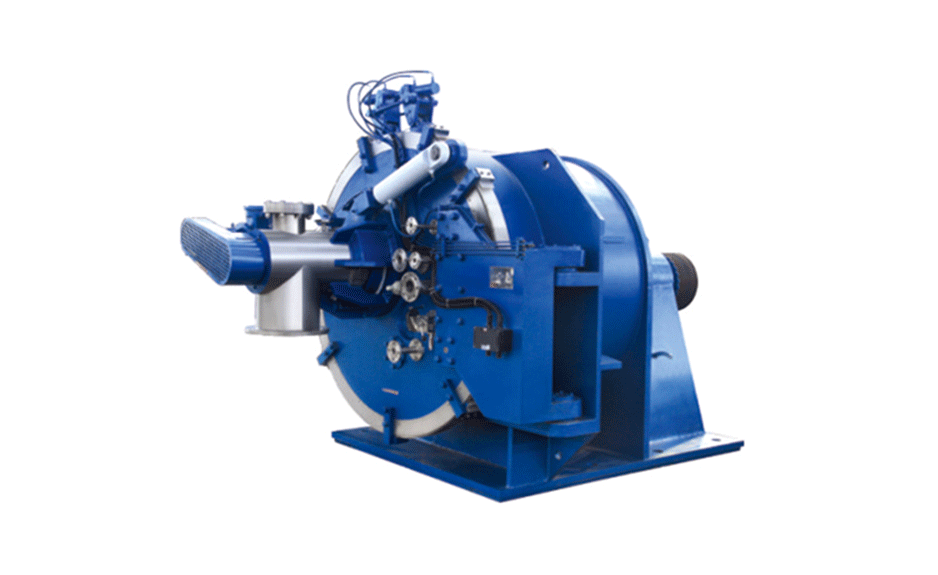
Tel:
0086-523-848088860086-18861028088


Choosing the right centrifuge is not only a matter of equipment size. In many chemical, pharmaceutical, food, agricultural chemical, new energy, and wastewater-related processes, the centrifuge affects product dryness, washing quality, batch consistency, safety control, cleaning efficiency, and long-term operating cost.
Definition: An industrial centrifuge machine is a mechanical separation device that uses centrifugal force to separate solids from liquids, or to separate liquid phases with different densities, under controlled rotational motion.
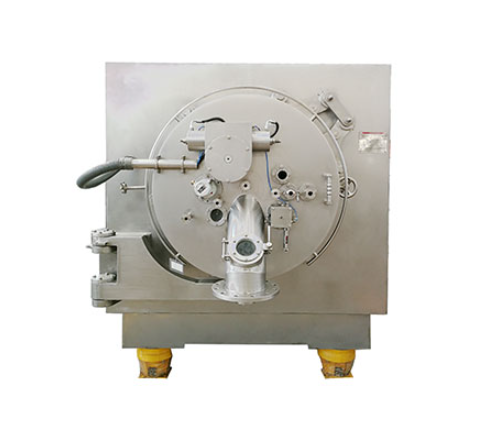
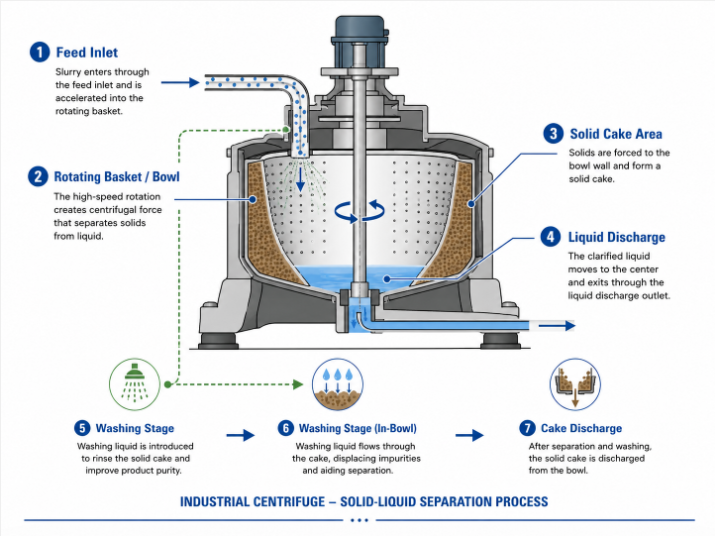
An industrial centrifuge machine is used when gravity settling or ordinary filtration cannot meet the required separation speed, product dryness, or production capacity. The machine rotates a suspension at high speed. Under centrifugal force, heavier particles move outward, while the liquid phase is discharged through a separate path. This basic principle is widely used in solid-liquid separation, liquid clarification, dewatering, washing, and concentration processes.
In practical production, the word "centrifuge" does not refer to one single machine design. Some centrifuges use a filter cloth or screen basket to retain solids. Others use sedimentation inside a rotating bowl. Some are designed for batch operation, while others support continuous feeding and discharging. This is why a buyer should not choose a centrifuge only by price or machine appearance.
Saideli’s industrial centrifuge range is positioned for larger industrial models and is used in industries such as pharmaceutical, chemical, and food processing. Its product information highlights high production capacity, low energy consumption, compact structure, and a high degree of automation. The company’s industrial centrifuge page also describes PLC control, frequency converter speed regulation, automatic operation, CIP cleaning, sealed explosion-proof structure, and applications involving pharmaceutical and chemical raw materials, intermediates, and finished products.
Solid-liquid separation is not a single standard process. A suspension with large crystals, free-draining particles, and low viscosity may work well in one centrifuge type, while a fine-particle slurry with high viscosity or strict washing requirements may require a different design. This is the main reason buyers should define process requirements before requesting a quotation.
The first question is the separation target. Do you need simple liquid clarification, high cake dryness, product washing, solvent recovery, closed operation, or contamination control? A machine designed mainly for high-throughput dewatering may not be the best choice for an API process requiring careful washing and clean discharge.
The second question is the material itself. Particle size distribution, crystal hardness, slurry concentration, viscosity, corrosiveness, temperature, solvent volatility, and flammability all affect the centrifuge design. For example, noxious, explosive, or combustible products often require sealed structures, inert gas protection, oxygen control, and reliable monitoring. Saideli’s industrial centrifuge page specifically mentions whole sealing explosion-proof structure, inert gas protection, automatic air exchange, polished inner surfaces, and rounded treatment of welds, corners, and edges for suitable processes.
The third question is the production mode. Batch production allows more flexible washing and discharge steps, while continuous production is often selected when feed quality is stable and capacity is the priority. In other words, the best solid-liquid separation centrifuge is the one that matches the process route, not simply the fastest machine available.
Before selecting an industrial centrifuge, buyers should prepare a basic process description. This does not need to be overly complicated, but it should be specific enough for the manufacturer to judge the machine type, material of construction, motor configuration, control system, discharge method, and cleaning design.
The following factors are especially important:
Feed characteristics: slurry concentration, particle size, particle shape, viscosity, temperature, and pH value.
Separation goal: clarification, dehydration, washing, purification, crystal recovery, or solvent removal.
Required cake condition: residual moisture, cake thickness, cake washing level, and discharge cleanliness.
Production mode: batch operation, continuous operation, or automatic cyclic operation.
Capacity requirement: feed volume per batch or per hour, as well as future scale-up plans.
Cleaning and contamination control: CIP system, cleanability, dead-corner control, product contact surface treatment, and validation needs.
Safety requirement: sealed structure, explosion-proof design, solvent vapor handling, inert gas protection, vibration monitoring, and oxygen control.
Automation level: PLC control, frequency conversion, automatic feeding, washing, dehydration, discharging, and status monitoring.
For pharmaceutical-related production, equipment cleaning is not a minor detail. The U.S. eCFR section on equipment cleaning and maintenance states that equipment and utensils used in drug manufacturing should be cleaned, maintained, and, when appropriate, sanitized or sterilized at suitable intervals to prevent contamination or quality changes. This makes cleanability, CIP design, and documented maintenance especially important when a centrifuge is used in regulated processes.
Industrial centrifuge machine types are often classified by separation principle and discharge method. The most common choices include basket centrifuges, decanter centrifuges, scraper or peeler centrifuges, and pusher centrifuges. Each type has a suitable working window.
| Centrifuge Type | Typical Process Fit | Main Strength | Buyer Should Check |
|---|---|---|---|
| Basket Centrifuge | Batch solid-liquid separation, crystal recovery, product washing | Flexible operation and good cake handling | Particle size, cake discharge method, washing need, cleaning requirement |
| Decanter Centrifuge | Continuous clarification, sludge dewatering, high-volume slurry separation | Continuous feed and discharge | Solids concentration, liquid clarity target, abrasion, differential speed control |
| Scraper or Peeler Centrifuge | Batch separation with automatic cake removal | Controlled washing, dehydration, and discharge | Cleanability, scraper design, residual cake removal, GMP needs |
| Pusher Centrifuge | Continuous separation of crystalline or granular solids | Stable continuous cake transport | Crystal strength, screen opening, feed stability, cake breakage risk |
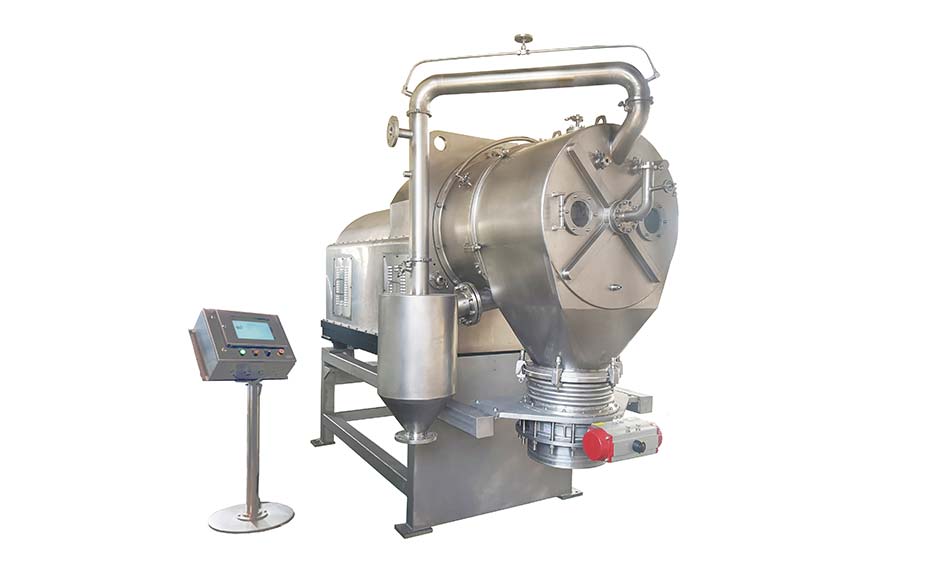
Saideli’s horizontal centrifuge category includes horizontal scraper centrifuges, siphon horizontal scraper centrifuges, screen filtration centrifuges, decanter centrifuges, pusher centrifuges, and inverting centrifuges. Its horizontal product information describes PLC control, frequency converter speed regulation, dynamic braking, regenerative braking, and automatic separation processes. Buyers comparing a horizontal centrifuge machine should focus on production capacity, separation performance, automation, and whether the power area and process area need absolute isolation.
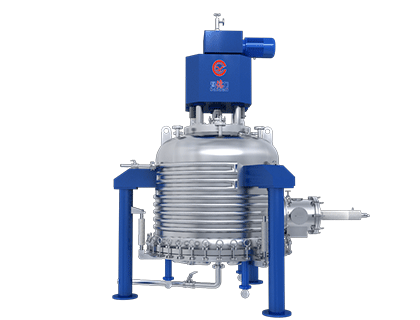
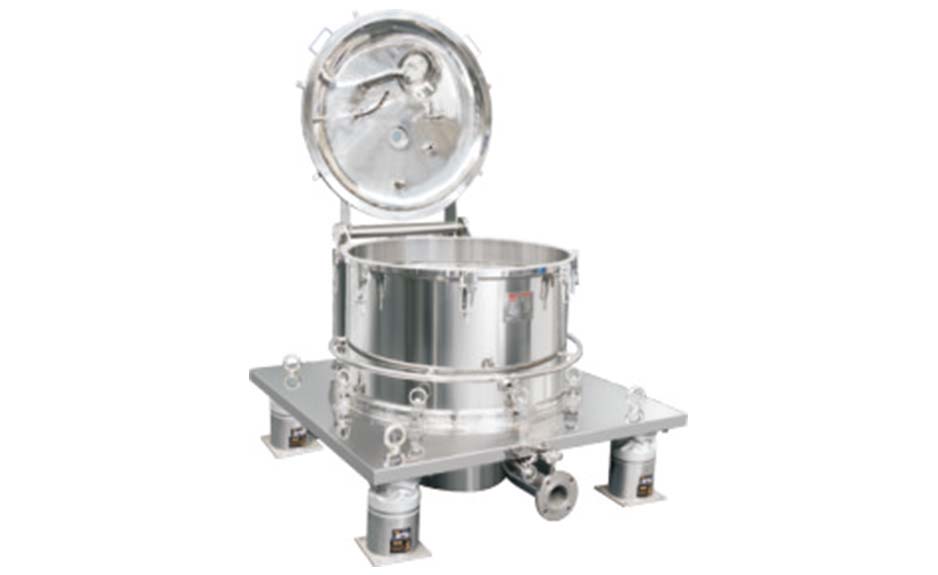
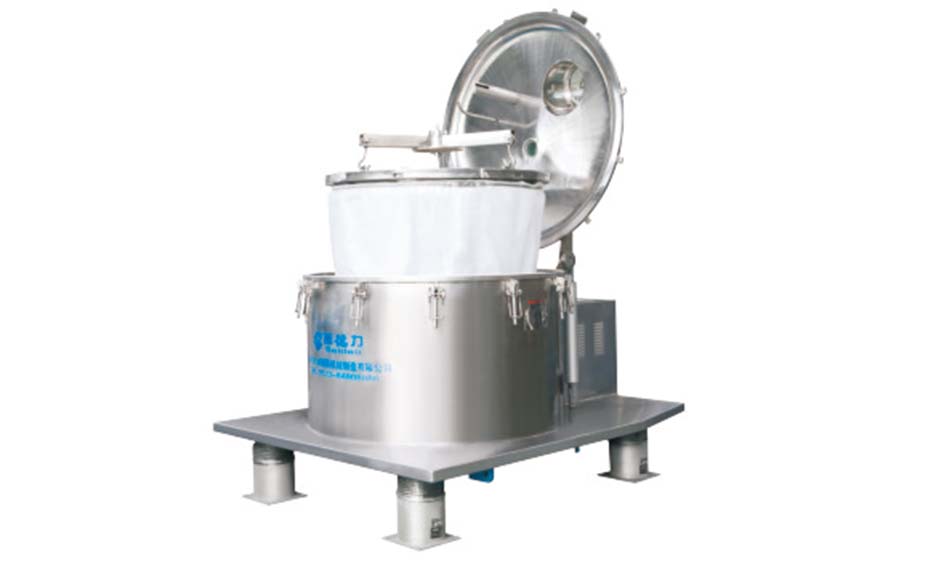
Vertical machines are often considered when the process requires top discharge, bottom discharge, bag lifting, scraper discharge, or a compact vertical arrangement. Saideli’s vertical centrifuge product information mentions additional washing functions, a pneumatically assisted scraper for removing remnant filter cake, optional CIP, frequency control for stable start-up, and PLC-supported automated processes. A vertical centrifuge machine may be suitable when cleaning performance, discharge mode, and batch control are important selection points.
A reliable centrifuge selection starts with testing or at least a clear material data sheet. In many projects, two materials that look similar on paper behave very differently in the centrifuge. One may form a firm and washable cake, while another may blind the filter cloth, create unstable vibration, or discharge poorly.
For crystalline products, check whether the particles can withstand mechanical scraping or pushing. Fragile crystals may break during aggressive discharge, affecting downstream drying or product quality. For fine particles, the key issue is usually filtration resistance. If the cake is dense and difficult to drain, the buyer may need a different filter medium, a longer dehydration stage, a siphon-assisted structure, or a different centrifuge type.
For high-value pharmaceutical or fine chemical materials, the question is not only “Can the machine separate?” but also “Can the machine separate without contamination?” Inner surface polishing, smooth corners, reduced dead angles, CIP cleaning, residual cake removal, sealed operation, and process-area isolation become more important than maximum capacity alone.
For production capacity, the buyer should avoid quoting only a daily output target. A better request includes feed concentration, batch size, cycle time target, required residual moisture, washing ratio, expected operating hours, and discharge method. In automatic centrifuge selection, cycle time includes feeding, separation, washing, dehydration, discharging, cleaning, and preparation for the next batch. Ignoring any one of these steps can lead to a machine that looks large enough but cannot meet real production output.
For flammable or solvent-containing materials, selection should also include safety control. Saideli’s industrial centrifuge information describes sealed explosion-proof structures, automatic air exchange based on oxygen content or protective gas pressure, inert gas protection, vibration monitoring, speed inspection, shaft temperature monitoring, and PLC-based automatic cyclic work. These design points are relevant when the process involves volatile solvents, combustible dust, or hazardous suspensions.
Industrial centrifuge machines are used across many process industries because solid-liquid separation is a common production step. The exact equipment design changes with the material, but the underlying purpose is similar: recover valuable solids, remove unwanted liquid, improve purity, reduce drying load, or clarify a liquid stream.
In pharmaceutical production, centrifuges are commonly used for APIs, intermediates, and other materials that require controlled separation, washing, and contamination prevention. Equipment selection often focuses on GMP-oriented structure, cleanability, closed operation, automation, and repeatable process control.
In chemical and fine chemical production, centrifuges handle crystals, catalysts, resins, pigments, salts, and other suspensions. Buyers usually focus on corrosion resistance, solvent compatibility, cake washing, discharge reliability, and explosion-proof structure where required.
In food-related processing, centrifuges may be used for starch, sugar, sweetener, and other suspension separation processes. Hygienic design, cleaning convenience, material compatibility, and stable operation are important selection points.
In agricultural chemical production, solid-liquid separation may be required for products such as herbicide or pesticide intermediates. Equipment should be selected according to material toxicity, solvent system, particle behavior, and operator safety needs.
In new energy material production, centrifuges may be applied in lithium carbonate, lithium-related extraction, or electrolyte suspension processes. In these applications, separation quality, material compatibility, and stable batch-to-batch operation are especially important.
An experienced industrial centrifuge manufacturer does more than sell a machine. The manufacturer should help review the process, identify risks, recommend a suitable centrifuge type, and adjust the configuration according to material behavior and site requirements.
For a new project, the buyer should ask the manufacturer several practical questions: Has the material been tested before? Which discharge method is recommended? Is CIP required? Can the machine be designed for sealed or explosion-proof operation? What automation level is realistic? How will vibration, speed, temperature, and product level be monitored? What spare parts and maintenance support are available after installation?
Saideli’s product pages show a broad industrial centrifuge portfolio, including horizontal centrifuges, vertical centrifuges, top suspended centrifuges, decanter centrifuges, pusher centrifuges, scraper centrifuges, and filtration centrifuges. This type of product coverage is useful for buyers who are still comparing possible machine designs rather than replacing an existing model directly.
A good centrifuge machine manufacturer should also be careful with claims. No single centrifuge type is best for every slurry. A responsible recommendation should be based on material properties, process target, cleaning level, safety requirements, and production capacity. For B2B buyers, this approach reduces the risk of purchasing equipment that works in theory but creates problems in daily operation.
Choosing an industrial centrifuge machine should start from the material, not the catalog. Buyers need to define the separation target, particle behavior, washing needs, cleaning standard, safety conditions, automation level, and real production capacity. With the right technical review, a centrifuge can improve separation stability, product quality, and long-term process efficiency.
What is an industrial centrifuge machine used for?
It is used for separating solids from liquids, clarifying liquids, recovering crystals, washing filter cakes, dewatering materials, and improving purity in chemical, pharmaceutical, food, agricultural chemical, and new energy processes.
How do I choose the right solid-liquid separation centrifuge?
Start with the material properties, including particle size, slurry concentration, viscosity, temperature, corrosiveness, and solvent system. Then define the required cake dryness, washing level, capacity, cleaning method, discharge mode, and safety requirements.
What is the difference between a decanter centrifuge and a basket centrifuge?
A decanter centrifuge is typically used for continuous sedimentation and clarification, while a basket centrifuge is often used for batch filtration, cake washing, and crystal recovery. The better choice depends on the material and process goal.
When should I choose a horizontal centrifuge?
A horizontal centrifuge is often selected when the process needs strong automation, high production capacity, automatic discharge, controlled washing, or continuous/intermittent operation depending on the specific model.
When should I choose a vertical centrifuge?
A vertical centrifuge may be suitable when the process requires batch control, compact structure, washing functions, top or bottom discharge, scraper-assisted cake removal, or convenient cleaning for regulated production.
Why is CIP important for industrial centrifuges?
CIP helps clean internal parts that are difficult to reach manually. It is especially important when buyers need to reduce cross-contamination risk, improve cleaning repeatability, and support pharmaceutical or fine chemical production requirements.