 EN
EN
 ko
ko  vi
vi  ru
ru  tr
tr  fr
fr  es
es  it
it  kk
kk  id
id 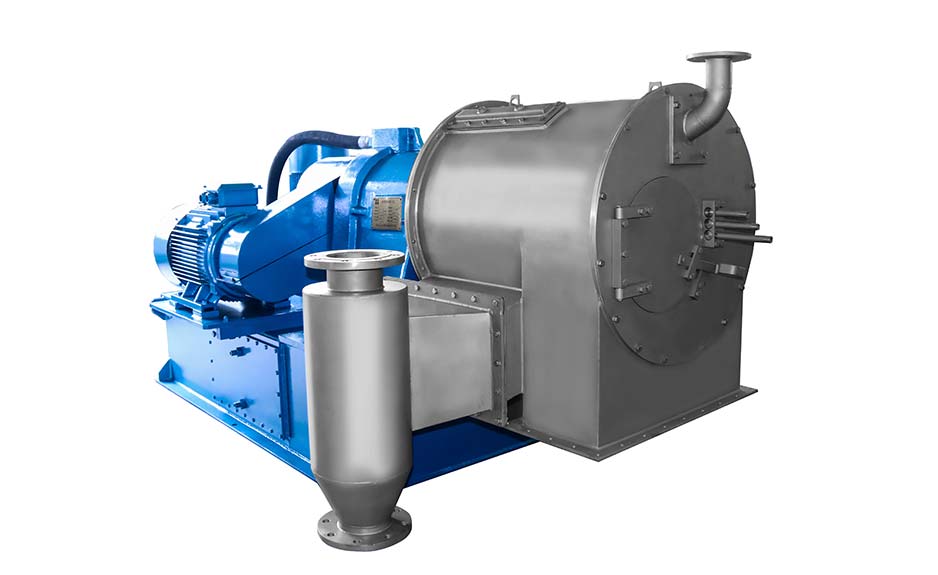
Tel:
0086-523-848088860086-18861028088


Choosing between a pusher centrifuge vs peeler centrifuge depends mainly on feed properties and process goals. Both are filtering centrifuges for solid-liquid separation, but they differ in operating mode, solids discharge, suitable particle size and process flexibility.
A pusher centrifuge is generally better for continuous, high-throughput separation of relatively coarse crystalline solids. A peeler centrifuge normally works in repeated cycles and uses a scraper to remove the filter cake, giving operators more control over filtration, washing and drying.
The right choice should therefore be based on particle size, solids concentration, required capacity, cake washing, final moisture and discharge behavior rather than on machine type alone.
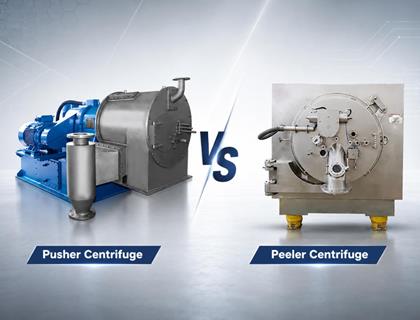
The main difference between a pusher centrifuge and a peeler centrifuge is that the pusher operates continuously, while the peeler typically uses batch filtration followed by scraper discharge.
| Factor | Pusher Centrifuge | Peeler Centrifuge |
|---|---|---|
| Operation | Continuous | Batch / cyclic |
| Solids discharge | Piston pushing | Scraper peeling |
| Typical feed | Medium/coarse crystals | Fine to medium particles |
| Throughput | Generally high | Depends on cycle time |
| Cake washing | Continuous washing possible | Highly controllable batch washing |
| Process flexibility | Lower | Higher |
| Common use | Bulk crystalline products | Fine chemicals, pharma, specialty products |
Saideli's HR pusher range is designed for suspensions with particle size generally above 0.1 mm and solids concentration above 30%. Its published selection guidance gives a typical solids concentration range of 30–80%, while model capacities range from about 1–8 t/h up to 18–50 t/h.
These numbers help explain why pusher machines are often selected for high-volume crystalline products, while peelers are more suitable where batch control and flexible treatment are important.
A pusher centrifuge continuously moves filter cake through the rotating basket, while a peeler centrifuge forms a batch cake and removes it mechanically with a scraper.
In a pusher machine, suspension enters the rotating basket continuously. Liquid passes through the filter medium, while solids form a cake. A reciprocating pushing mechanism then advances that cake toward the discharge end.
This allows feeding, filtration, washing and discharge to continue without repeatedly stopping the process. Saideli's article on the pusher centrifuge also explains that washing liquid and mother liquor can be separated when product washing is required.
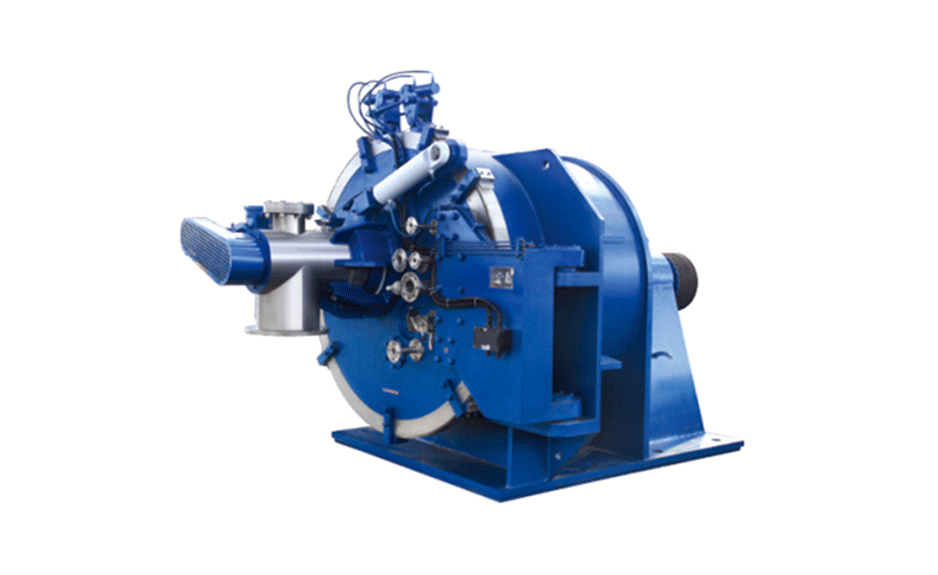
A peeler centrifuge works differently. Suspension is charged into the basket, liquid is filtered out, and solids form a cake on the basket wall. After filtration, optional washing and spin drying, a scraper removes the cake.
This operating distinction is consistent with the wider classification of filtering centrifuges. A ScienceDirect reference on centrifugal separation classifies peelers among batch filtering centrifuges and pushers among continuous filtering centrifuges.
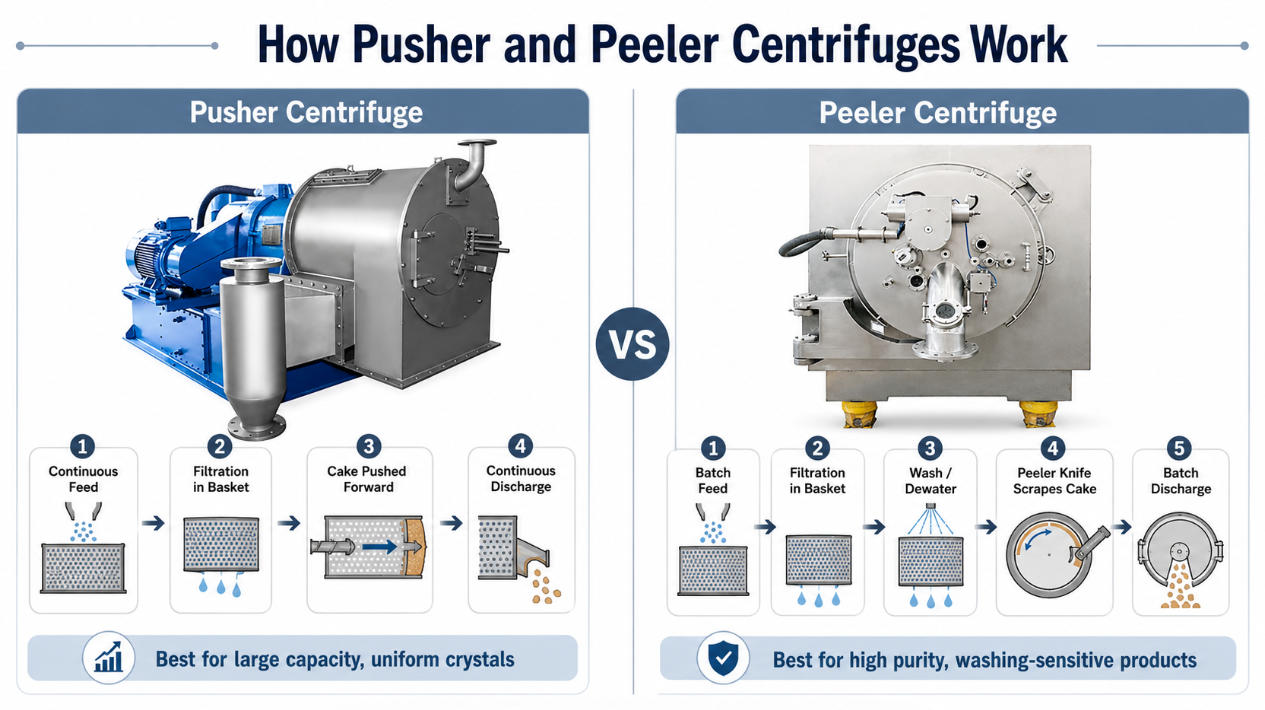
The practical differences between pusher and peeler centrifuges come from how each machine handles particle size, cake formation, throughput and process control.
Pusher machines require a sufficiently stable and permeable cake. Very fine or poorly filtering solids can make cake movement difficult or reduce filtration efficiency. Coarser, free-draining crystalline materials are usually more suitable.
Peeler centrifuges do not need to push the cake continuously through the basket. This gives them greater flexibility for fine and medium-particle suspensions and processes that require carefully controlled washing or drying.
Discharge method also matters. Pusher discharge is continuous, which supports steady production. Peeler discharge is intermittent, but the batch cycle allows operators to adjust feed, wash and drying time more precisely.
Saideli's GKC horizontal scraper centrifuge range illustrates the scale available for peeler-type equipment. Published models use basket diameters from 600 to 1600 mm, with loading capacities from 53 to 900 kg.
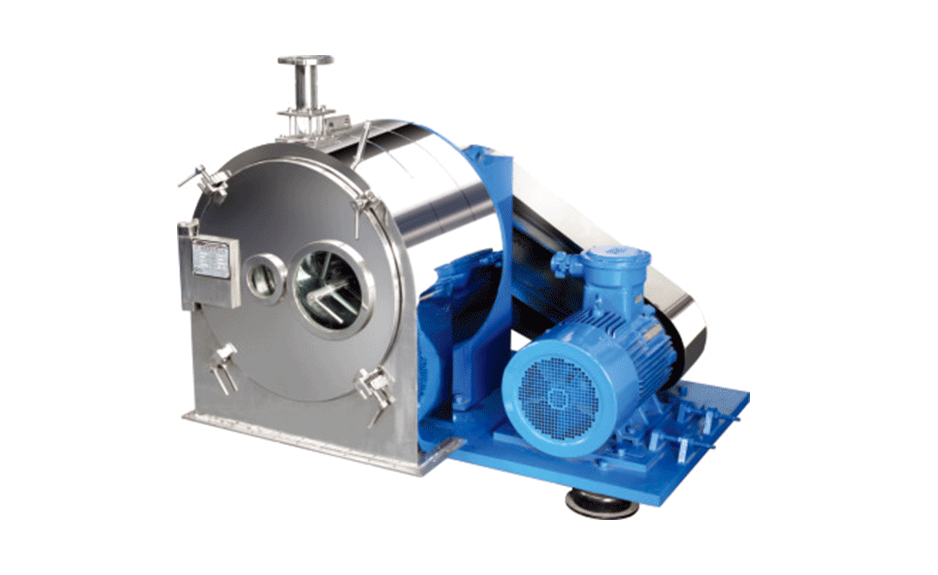
A pusher centrifuge is usually preferred when the feed contains relatively coarse, free-filtering crystals and the plant requires continuous high-capacity separation.
Typical applications include salts, fertilizers, urea and other crystalline chemical or food products that can form a stable cake.
When evaluating this type of process, working with an experienced pusher centrifuge manufacturer is useful because equipment size, stroke frequency, basket speed and washing configuration must match the actual feed.
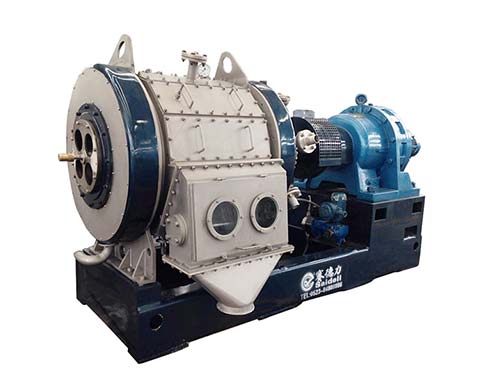
Saideli's HR series uses a two-stage pushing design. Published models range from HR400-N to HR1000-N, with basket diameters up to 1000 mm and production capacity up to 18–50 t/h on the largest listed model.
A pusher is less suitable when particles are extremely fine, feed concentration varies significantly or the cake cannot move reliably under the pushing action.
A peeler centrifuge is generally a better choice when controlled batch processing, fine-particle filtration or flexible cake washing is required.
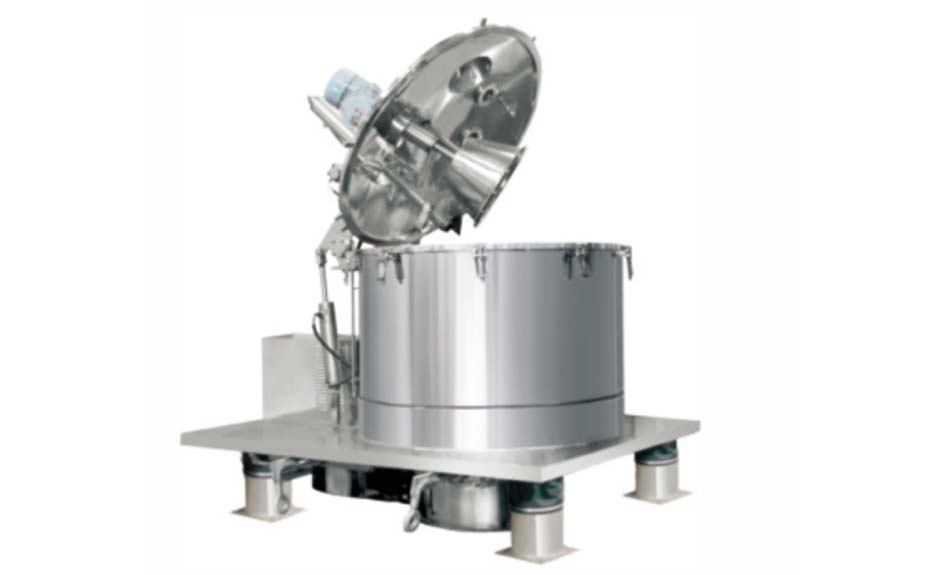
A horizontal peeler centrifuge is often suitable for pharmaceutical, fine-chemical and specialty-material processes where filtration stages need closer control.
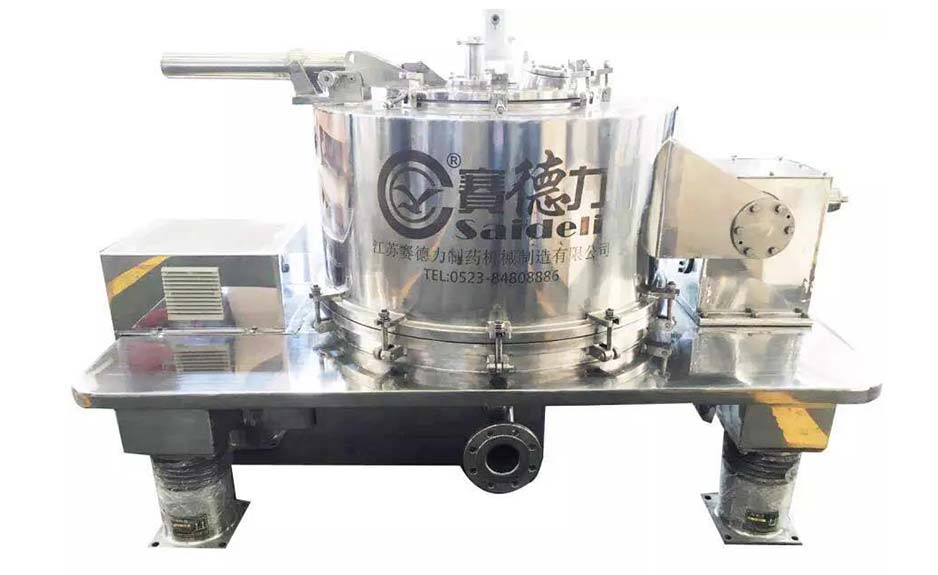
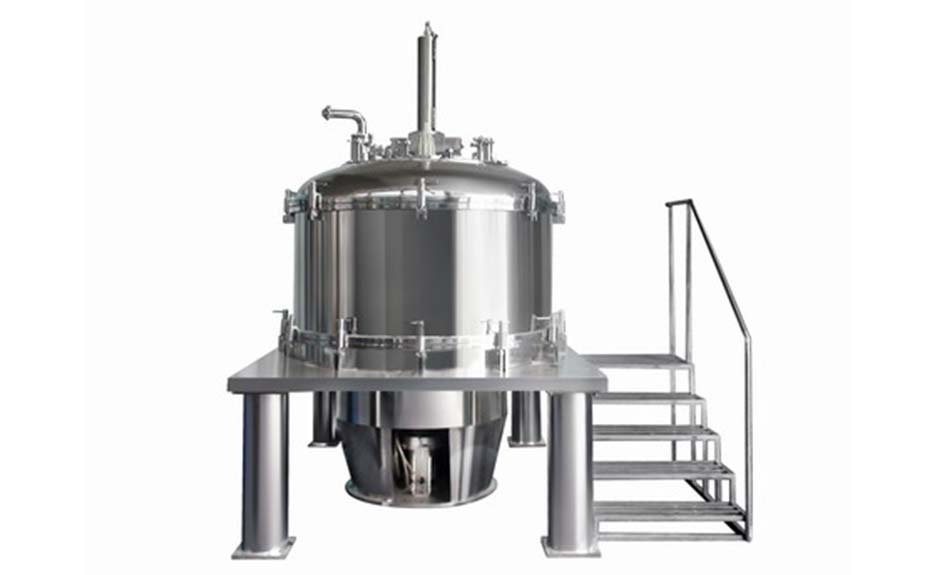
A vertical peeler centrifuge can be useful where plant layout, solids discharge or equipment access favors a vertical configuration. Saideli describes its vertical scraper machines as filtration centrifuges using continuous working with intermittent scraper discharge for medium-particle suspensions.
The decision between horizontal and vertical peelers should therefore consider plant layout, cleaning, containment, discharge direction and maintenance access rather than orientation alone.
The right centrifuge should be selected from actual feed and product data rather than from capacity alone.
Important selection factors include:
Particle size and distribution: coarse, stable crystals often favor a pusher; finer solids may favor a peeler.
Solids concentration: high and stable solids content is particularly important for pusher operation.
Required throughput: continuous bulk production may justify a pusher, while batch processing may benefit from a peeler.
Cake washing: determine how much control is needed over washing and drying.
Product sensitivity: consider crystal breakage, contamination and scraper effects.
Plant requirements: cleaning, containment, explosion protection and available space can influence the final design.
Industrial centrifuges are used for tasks ranging from dewatering and solids washing to clarification and particle recovery, and both continuous and discontinuous machines exist because different process objectives require different operating modes. This broader selection logic is summarized in a review of centrifuge technology.
For materials near the boundary between the two technologies, pilot testing or detailed feed analysis is usually more reliable than choosing from particle size alone.
The pusher centrifuge vs peeler centrifuge decision should be based on material behavior and production requirements.
Pusher centrifuges are strongest in continuous, high-capacity separation of relatively coarse crystalline solids. Peeler centrifuges provide greater batch flexibility and are often better for fine or medium particles requiring controlled filtration and cake washing.
For Saideli or any centrifuge supplier, meaningful equipment selection should begin with particle size, solids concentration, feed rate, washing requirements and target cake moisture rather than machine type alone.
A pusher normally operates continuously, while a peeler forms and discharges cake in repeated cycles.
A pusher centrifuge is generally more suitable when coarse crystals form a stable, free-draining cake.
Peeler centrifuges are often better suited to fine or medium-particle suspensions.
Yes. Both can support cake washing, but the washing sequence and control differ.
Not always, but pushers are commonly selected for high-throughput continuous processing.
Provide particle size, solids concentration, feed rate, viscosity, washing requirements, target moisture and material characteristics.