 EN
EN
 ko
ko  vi
vi  ru
ru  tr
tr  fr
fr  es
es  it
it  kk
kk  id
id 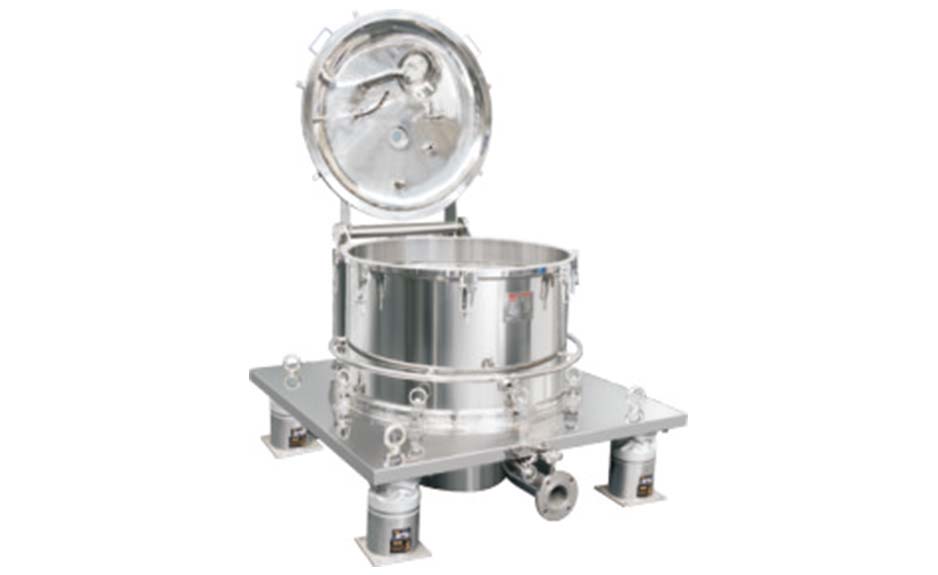
Tel:
0086-523-848088860086-18861028088


Industrial centrifuges are widely used in chemical, pharmaceutical, food, environmental, mining, and new energy production. Although all centrifuges use centrifugal force, different machine types are designed for different materials, production methods, discharge requirements, and separation goals.
For buyers, understanding the main types of centrifuges is essential before selecting equipment. A centrifuge used for coarse salt crystals may not be suitable for pharmaceutical intermediates. A machine used for sludge dewatering may not be suitable for fine chemical washing. Choosing the wrong centrifuge can lead to poor moisture control, unstable discharge, product breakage, high maintenance cost, or low production efficiency.
This guide explains the major types of industrial centrifuges, their working features, typical applications, and selection criteria for industrial buyers.
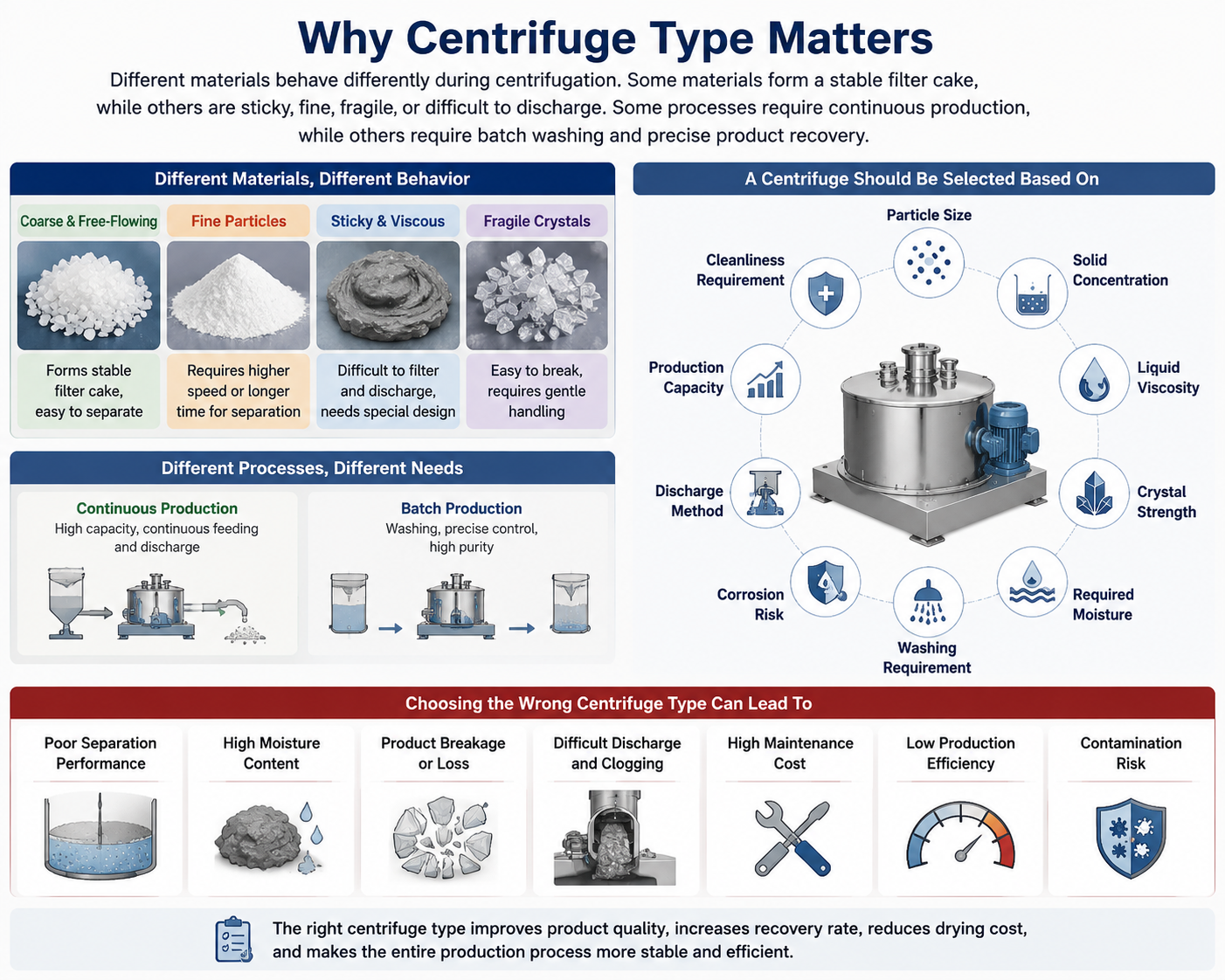
Different materials behave differently during centrifugation. Some materials form a stable filter cake, while others are sticky, fine, fragile, or difficult to discharge. Some processes require continuous production, while others require batch washing and precise product recovery.
A centrifuge should be selected based on:
· Particle size
· Solid concentration
· Liquid viscosity
· Crystal strength
· Required moisture
· Washing requirement
· Corrosion risk
· Production capacity
· Discharge method
· Cleanliness requirement
In industrial production, a suitable centrifuge can improve product quality, reduce drying cost, increase recovery rate, and make the process more stable.
Centrifuge Type | Operation Mode | Best For | Key Advantage |
Pusher centrifuge | Continuous | Coarse crystals and high-solid slurry | High capacity and continuous discharge |
Horizontal peeler centrifuge | Batch automatic | Fine chemicals and pharmaceutical solids | Good washing and controlled scraper discharge |
Vertical peeler centrifuge | Batch automatic | Medium particle suspensions | Compact design and flexible operation |
Basket centrifuge | Batch | General solid-liquid separation | Simple structure and wide application |
Inverting centrifuge | Batch automatic | High-cleanliness materials | Low residue and cleaner discharge |
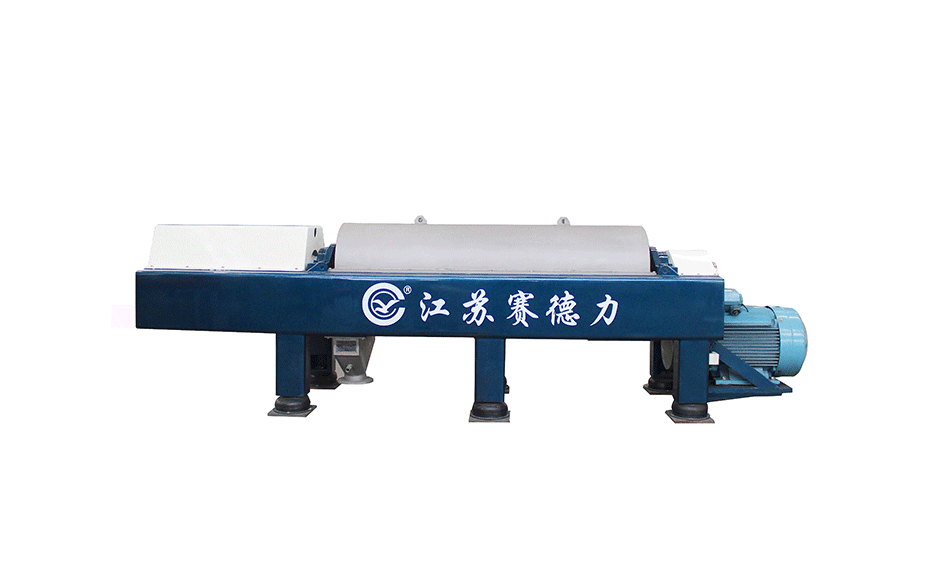
Decanter centrifuge | Continuous | Sludge and high-volume slurry | Continuous sedimentation separation |
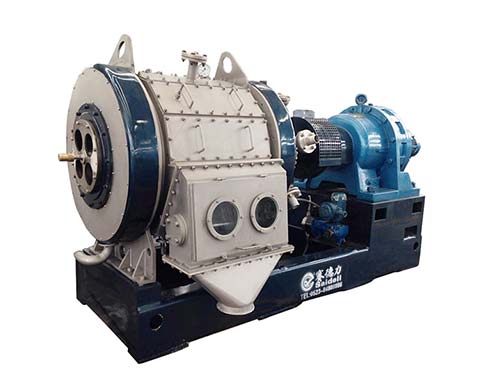
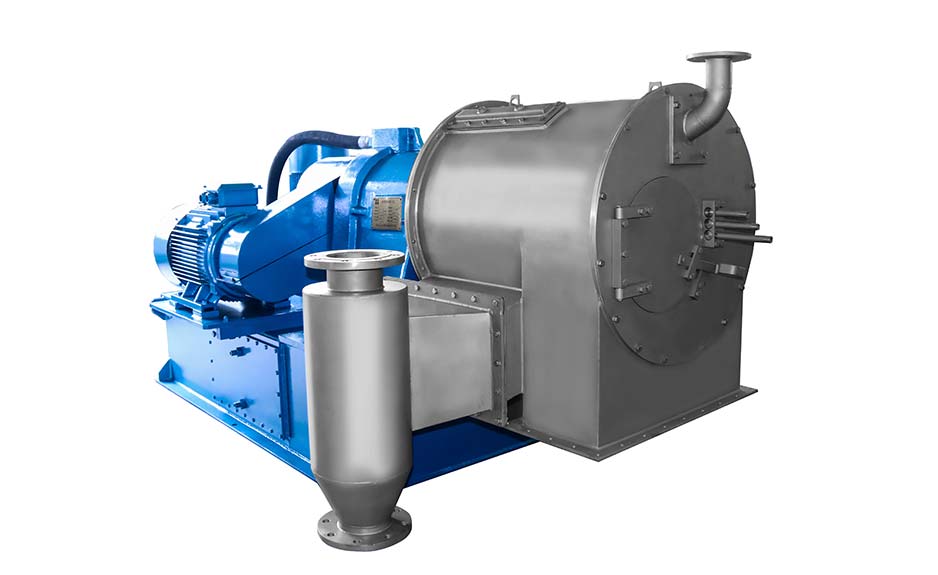
pusher centrifuges are continuous filtration centrifuges designed for materials with relatively coarse particles and high solid concentration. During operation, the feed enters the rotating basket, liquid passes through the screen, and the solid cake is pushed forward step by step for continuous discharge.
· Continuous feeding and discharge
· High production capacity
· Suitable for coarse crystalline products
· Efficient washing and dewatering
· Stable operation for large-scale production
Pusher centrifuges are commonly used for salt, fertilizer, soda ash, chemical crystals, food ingredients, and other materials that can form a stable filter cake.
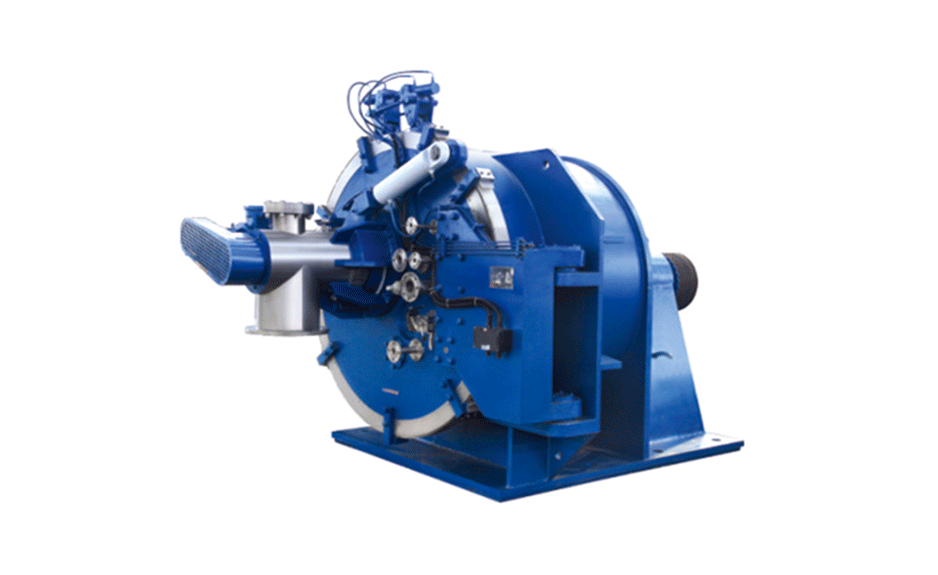
A horizontal peeler centrifuge is a batch filtration centrifuge with automatic scraper discharge. It is often selected when the process requires cake washing, controlled filtration, and automatic unloading.
A horizontal centrifuge machine is commonly used in fine chemical and pharmaceutical production because it provides good process control and is suitable for products that require higher purity.
· Good cake washing performance
· Automatic scraper discharge
· Suitable for fine chemicals and APIs
· Better control of filtration and washing cycle
· Enclosed operation available for hazardous or clean production
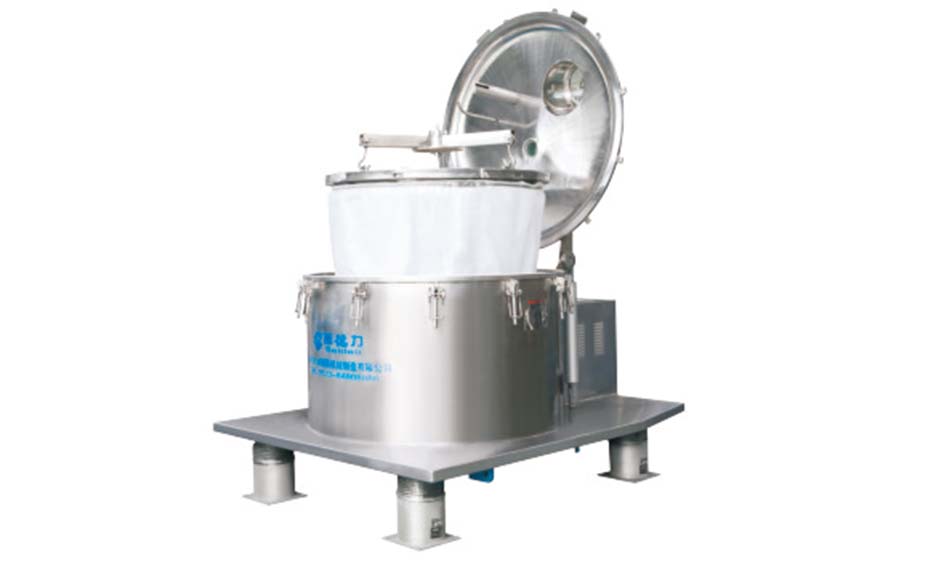
vertical centrifuges are often used for batch solid-liquid separation. A vertical peeler centrifuge uses scraper discharge and is suitable for medium particle suspensions and production lines that require compact equipment layout.
· Compact floor space
· Flexible batch operation
· Suitable for many chemical materials
· Scraper discharge reduces manual labor
· Can be customized for corrosion-resistant applications
Compared with horizontal designs, vertical centrifuges may be easier to install in certain workshop layouts, especially where space is limited.
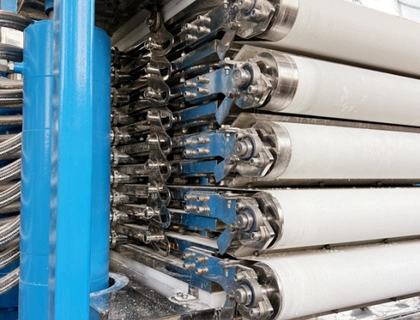
A basket centrifuge is one of the most common centrifuge types for general solid-liquid separation. It uses a rotating perforated basket and filter medium to separate solids from liquids.
A perforated basket centrifuge is suitable for batch processing where the material can form a filter cake and does not require highly complex discharge systems.
· Simple structure
· Easy operation
· Broad application range
· Suitable for small to medium batch production
· Lower equipment complexity
A basket type centrifuge may be used in chemical processing, food production, textile applications, and general industrial dewatering.
An inverting filter centrifuge is designed for cleaner discharge and reduced product residue. During discharge, the filter cloth is inverted to help remove the cake more completely.
· Reduced cake residue
· Cleaner discharge
· Better product recovery
· Suitable for high-value products
· Lower risk of cross-contamination
This type is often used in pharmaceutical, fine chemical, and high-purity production where product recovery and cleanliness are important.
A decanter centrifuge is a continuous sedimentation centrifuge. Instead of using filter cloth, it separates solids and liquids based on density difference inside a rotating bowl. A screw conveyor continuously moves solids toward the discharge outlet.
· Continuous operation
· Suitable for sludge and slurry
· No filter cloth required
· Good for high-volume processing
· Stable solid-liquid separation for wastewater and environmental applications
Decanter centrifuges are commonly used in wastewater treatment, sludge dewatering, mineral processing, food processing, and chemical slurry separation.
Comparison Item | Filtration Centrifuge | Sedimentation Centrifuge |
Separation Method | Solids are retained by filter cloth or screen | Solids settle by density difference |
Typical Machines | Pusher, peeler, basket, inverting centrifuge | Decanter centrifuge |
Best For | Crystals, granular solids, filterable suspensions | Sludge, fine slurry, high-volume liquid-solid mixtures |
Filter Medium | Required | Usually not required |
Washing Performance | Usually better | Limited |
Cake Moisture Control | Strong | Depends on material and design |
Common Industries | Chemical, pharmaceutical, food | Wastewater, sludge, mining, food |
Understanding this difference is important when comparing types of centrifuge machine for a real production process.
Chemical production uses centrifuges for separating crystals, salts, catalysts, intermediates, and reaction products. Filtration centrifuges are commonly used when the product forms a filter cake and requires washing.
Pharmaceutical production often requires enclosed, cleanable, and automated centrifuges. Peeler and inverting centrifuges are frequently used for API intermediates and high-purity solids.
Food processing uses centrifuges for clarification, starch separation, sugar processing, fermentation, and wet solid recovery. The machine should meet hygiene and cleaning requirements.
Sludge and wastewater treatment often use decanter centrifuges because continuous sedimentation separation is suitable for high-volume processing.
New energy material production may require centrifuges for fine powders, battery materials, chemical intermediates, and functional materials. Corrosion resistance, abrasion resistance, and contamination control are important.
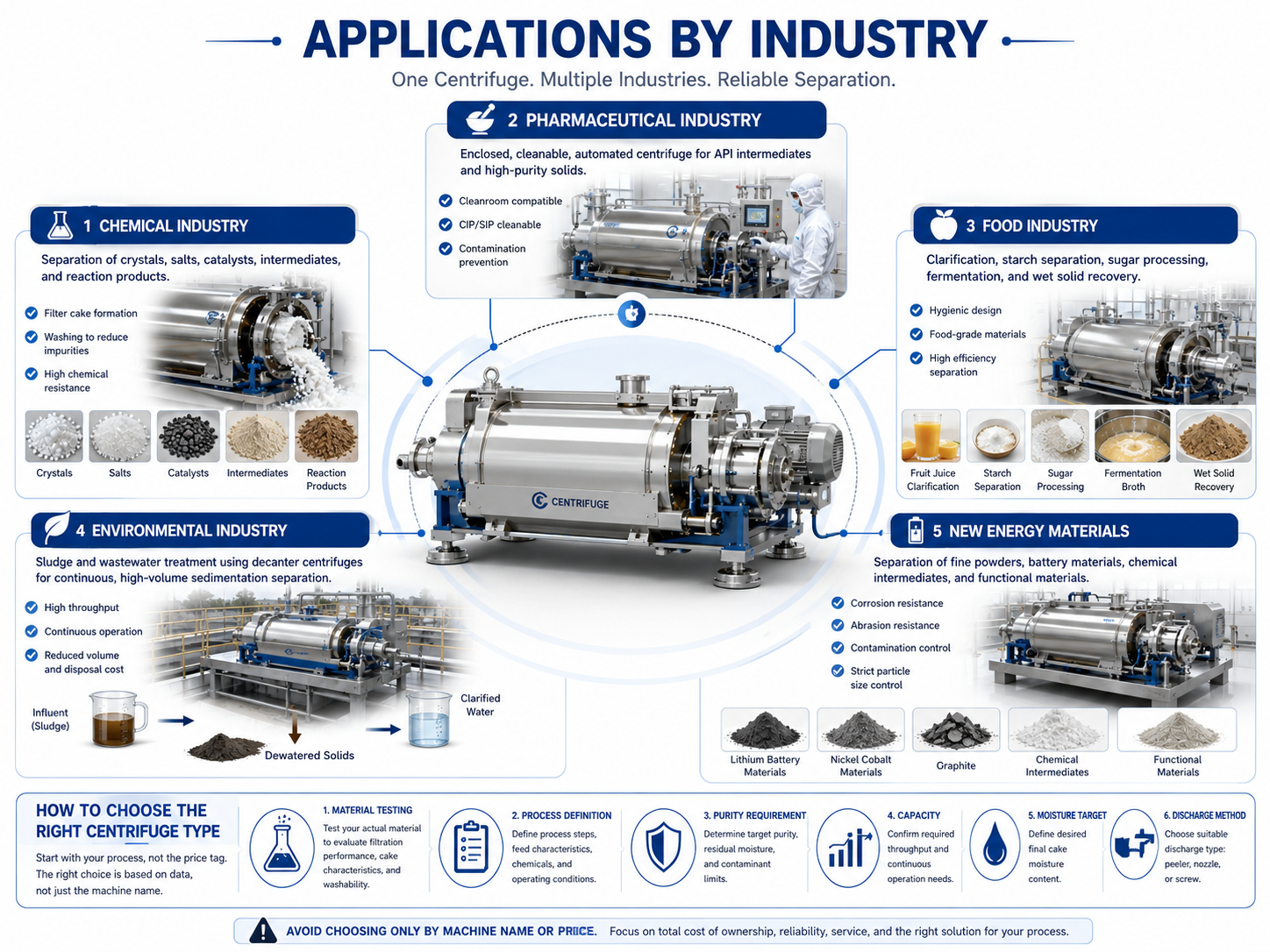
Selecting centrifuge equipment should begin with material testing and process definition. Buyers should avoid choosing only by machine name or price.
· Is the process continuous or batch?
· What is the solid concentration?
· What is the particle size distribution?
· Is the crystal fragile?
· Is cake washing required?
· What final moisture is needed?
· Is the liquid corrosive or flammable?
· Is enclosed or explosion-proof operation required?
· What production capacity is expected?
· How will solids be discharged?
A professional industrial centrifuge manufacturers team should help evaluate the material and recommend a machine based on actual process requirements.
A low-price centrifuge may lead to higher maintenance cost, poor separation, high moisture, unstable discharge, and more downtime.
Without material testing, it is difficult to predict filtration speed, cake behavior, discharge difficulty, and final moisture.
The wrong discharge method can damage crystals, leave too much residue, or reduce production efficiency.
For pharmaceutical, food, and fine chemical industries, cleaning design and maintenance accessibility are critical.
The main types include pusher centrifuges, peeler centrifuges, basket centrifuges, inverting centrifuges, and decanter centrifuges. Each type is designed for different materials and operating conditions.
A pusher centrifuge is used for continuous solid-liquid separation of coarse crystals and high-solid-content slurry. It is common in chemical, salt, fertilizer, and food processing.
A peeler centrifuge uses automatic scraper discharge and is suitable for controlled batch processing. A basket centrifuge has a simpler structure and is suitable for general batch solid-liquid separation.
Peeler centrifuges and inverting centrifuges are commonly used in pharmaceutical production because they support enclosed operation, washing, automatic discharge, and cleaner product recovery.
A decanter centrifuge is commonly used for sludge dewatering because it provides continuous sedimentation separation and can handle high-volume slurry.
You should evaluate particle size, solid concentration, liquid viscosity, crystal fragility, washing requirement, final moisture target, capacity, discharge method, and safety requirements before choosing a centrifuge.# Markdown syntax guide