 EN
EN
 ko
ko  vi
vi  ru
ru  tr
tr  fr
fr  es
es  it
it  kk
kk  id
id 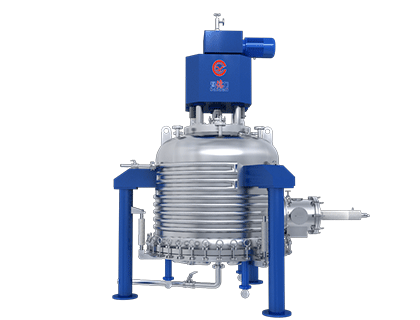
Tel:
0086-523-848088860086-18861028088


If you have ever wondered what is a centrifuge, what does a centrifuge do, or how does a centrifuge work, the basic answer is simple: a centrifuge is a machine that uses centrifugal force to accelerate the separation of components in a mixture.
In industrial production, centrifuges are especially important for separating solids from liquids, dewatering filter cakes, clarifying liquids, washing crystals, and processing pharmaceutical and chemical materials. Unlike laboratory equipment designed for small samples, an industrial centrifuge machine is engineered for continuous or batch production at much larger scales.
According to ScienceDirect, centrifugation separates mixture components according to differences such as density and particle size.
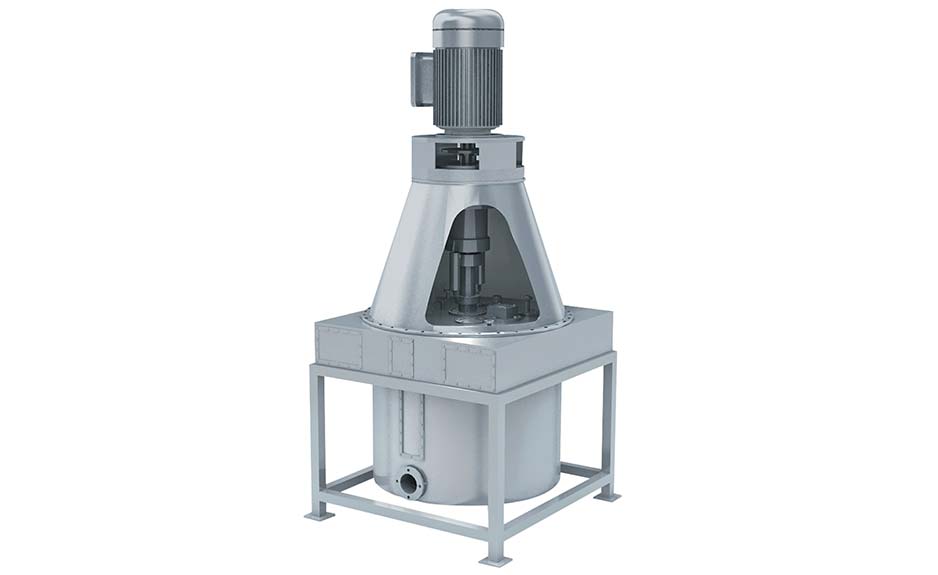
SAIDELI, an experienced industrial centrifuge manufacturer, provides horizontal, vertical, top-suspended, pusher, and inverting centrifuges for pharmaceutical, chemical, food, new energy, and environmental applications.
So, what does centrifuge mean in practical terms?
A centrifuge is a rotating separation device. When a mixture is placed inside a rotating bowl, basket, or drum, centrifugal force causes components with different densities or physical characteristics to move differently.
For example, in a solid-liquid suspension, denser solid particles generally move toward the outer wall of the rotating drum, while the liquid phase is separated through filtration or sedimentation.
The basic process can therefore be summarized as:
Feed → Rotation → Centrifugal Separation → Liquid Removal → Solid Collection
A centrifuge separator machine can use either centrifugal filtration or centrifugal sedimentation, depending on the characteristics of the material and the desired separation result.
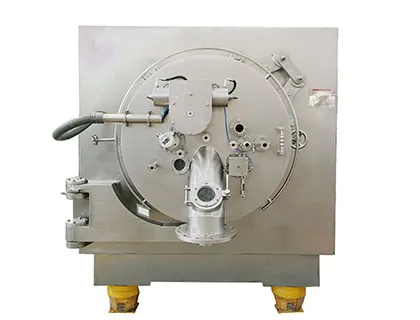
The answer to how does a centrifuge work lies in controlled rotation.
The feed enters the centrifuge and is distributed inside a rotating drum. As rotational speed increases, centrifugal acceleration forces the heavier component outward. In filtration centrifuges, the liquid passes through a filter medium while solid particles remain behind and form a filter cake.
ScienceDirect describes centrifugal separation as a mechanical process that accelerates material in a centrifugal field, with commercial centrifuges broadly including sedimentation centrifuges and centrifugal filters.
In industrial equipment, separation performance depends on factors including:
Rotational speed
Drum diameter
Centrifugal force
Particle size
Solid concentration
Density difference
Feed rate
Viscosity
Residence time
Filter medium
Therefore, choosing a centrifuge is not simply a matter of selecting the highest-speed machine.
The most common answer to what does a centrifuge do is that it separates components of a mixture more rapidly than gravity alone.
An industrial centrifuge can be used to:
Separate solids from liquids
Dewater wet solids
Recover crystals
Wash filter cakes
Clarify process liquids
Separate two liquid phases
Reduce moisture before drying
Recover valuable products
Process pharmaceutical intermediates
This makes the centrifuge machine industrial equipment an important unit operation in many manufacturing processes.
Industrial centrifuges are used wherever efficient phase separation is required.
A pharmaceutical centrifuge can be used for crystal separation, API processing, purification, washing, and solid-liquid separation.
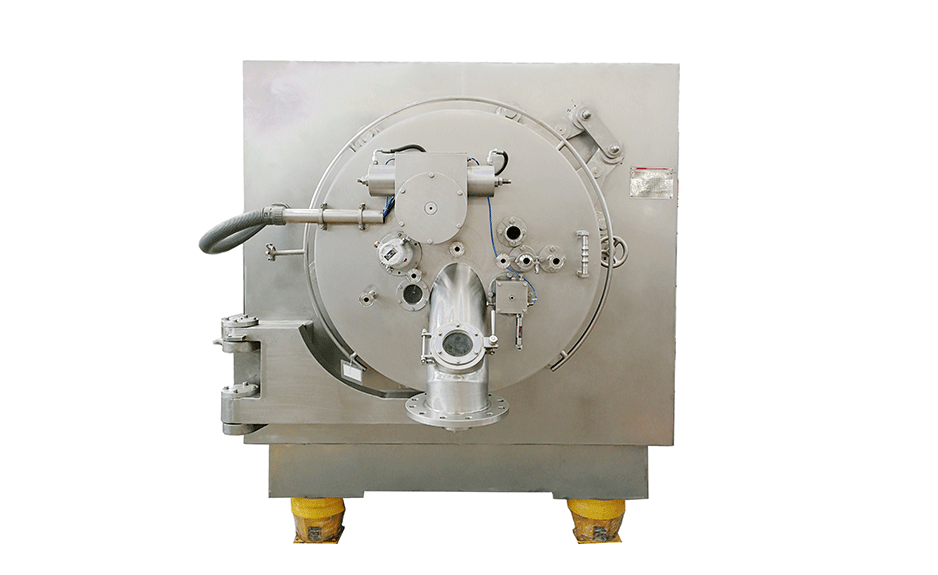
SAIDELI's horizontal centrifuge range is designed for pharmaceutical applications where enclosed operation, cleaning, and contamination control are important. Its GKC horizontal automatic scraper centrifuge is positioned for pharmaceutical production and can be configured for applications requiring high-quality cleaning and process isolation.
This is particularly relevant because pharmaceutical manufacturers must control equipment design, cleaning, maintenance, and contamination risks. The FDA's Q7 GMP guidance emphasizes appropriate equipment, cleaning, and controls for API manufacturing.
In chemical manufacturing, centrifuges can separate crystals, salts, fertilizers, and other solid-liquid mixtures.
In food processing, they may be used for starch, sugar, and other products where efficient separation and washing are required.
SAIDELI's equipment is also applied in new energy and environmental protection processes, demonstrating how centrifuge machine in industry can cover very different production requirements.
Different materials require different mechanical designs. The following table summarizes several major types.
Centrifuge Type | Operating Mode | Typical Application | Key Advantage |
Continuous Horizontal Centrifuge | Continuous | Chemical, pharmaceutical, food | High throughput |
Pusher Centrifuge | Continuous | Crystals, salts, chemicals | Continuous solid discharge |
Vertical Peeler Centrifuge | Batch | Fine chemicals, pharmaceuticals | Efficient cake filtration |
Inverting Centrifuge | Batch | Pharmaceutical and food | Gentle product discharge |
Decanter Centrifuge | Continuous | Sludge and fine solids | Continuous sedimentation |
Top-Suspended Centrifuge | Batch | Pharmaceutical and chemical | Flexible installation |
The appropriate design depends on feed properties, required capacity, crystal characteristics, moisture targets, and cleaning requirements.
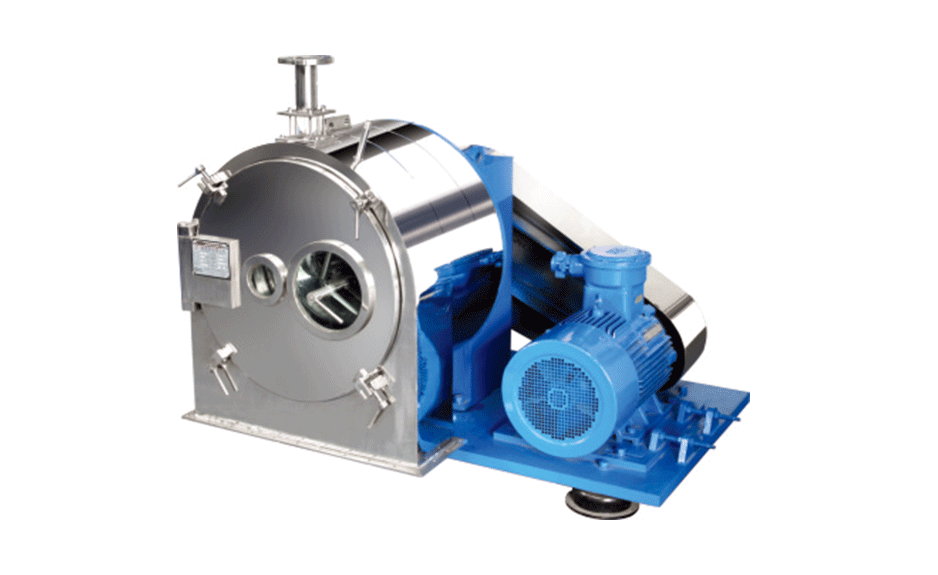
A continuous horizontal centrifuge continuously receives feed and removes separated material, making it suitable for large-volume production.
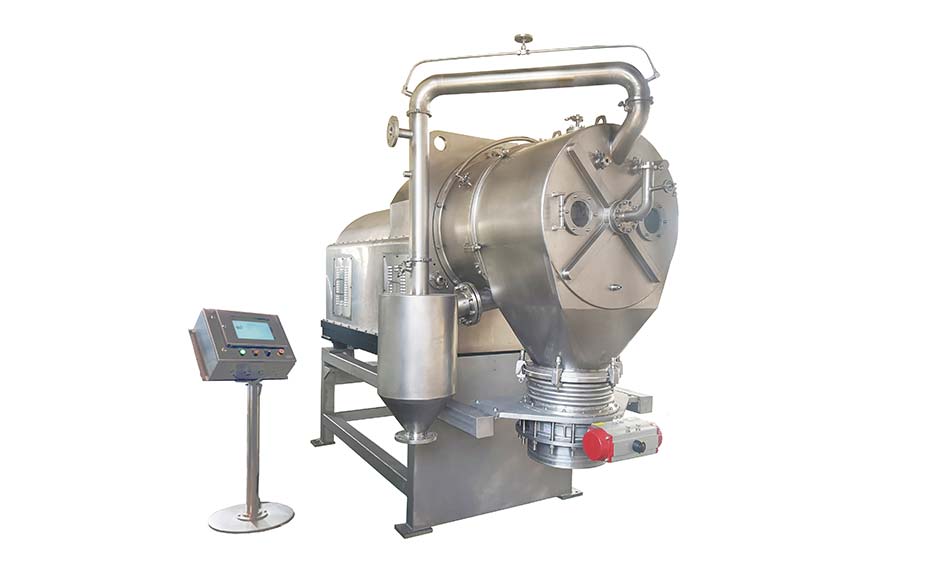
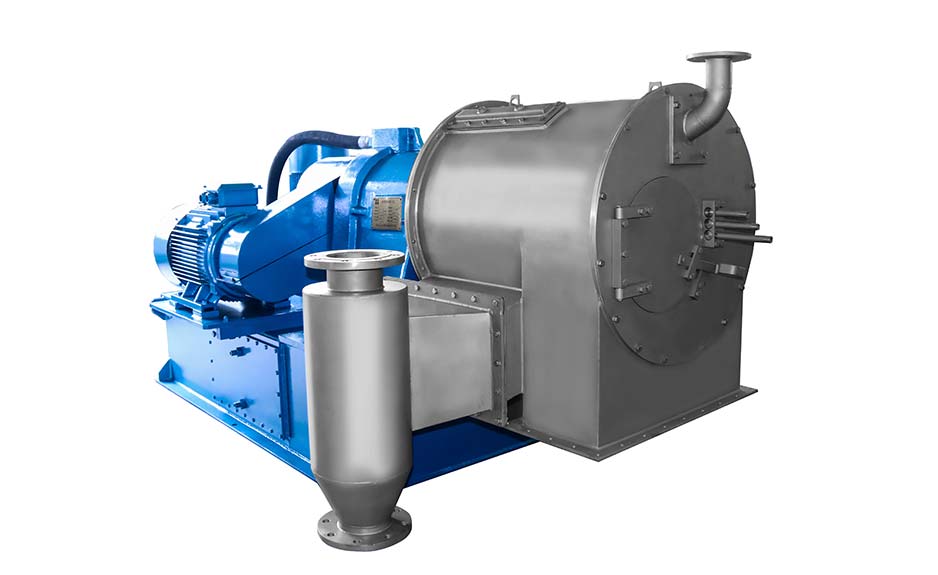
A pusher centrifuge is one example. SAIDELI's HR series uses a two-stage piston-pushing mechanism. Material enters continuously, liquid passes through the filtering screen, and the solid cake is progressively pushed toward discharge. The manufacturer lists production capacities ranging from approximately 1 to 50 t/h across different models.
This makes the pusher centrifuge manufacturer an important consideration when high throughput and continuous processing are priorities.
By comparison, batch centrifuges perform filling, separation, washing, dewatering, and discharge as individual cycles.
Industrial centrifuge capacity refers to how much material a machine can process over a specified period. However, capacity is not determined by machine size alone.
Important factors include:
Feed concentration
Particle size
Density
Viscosity
Filterability
Cake thickness
Required moisture content
Rotation speed
Feed rate
Discharge mechanism
For this reason, two centrifuges with similar dimensions may have significantly different practical throughput.
For centrifuge industrial scale applications, buyers should evaluate both nominal specifications and actual performance using representative material tests.
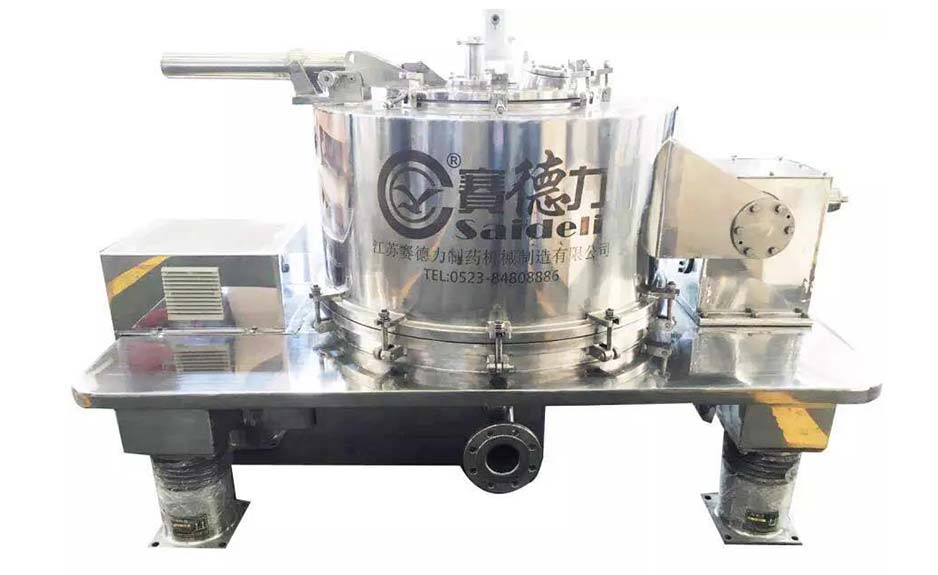
A vertical peeler centrifuge is designed around a vertical filtering basket and mechanical cake discharge. It can be suitable for batch filtration where controlled cake formation, washing, and discharge are required.
The peeler centrifuge working principle involves feeding the suspension into a rotating basket, allowing liquid to pass through the filter medium while solids form a cake. After dewatering and washing, a scraper or peeler mechanism removes the cake.
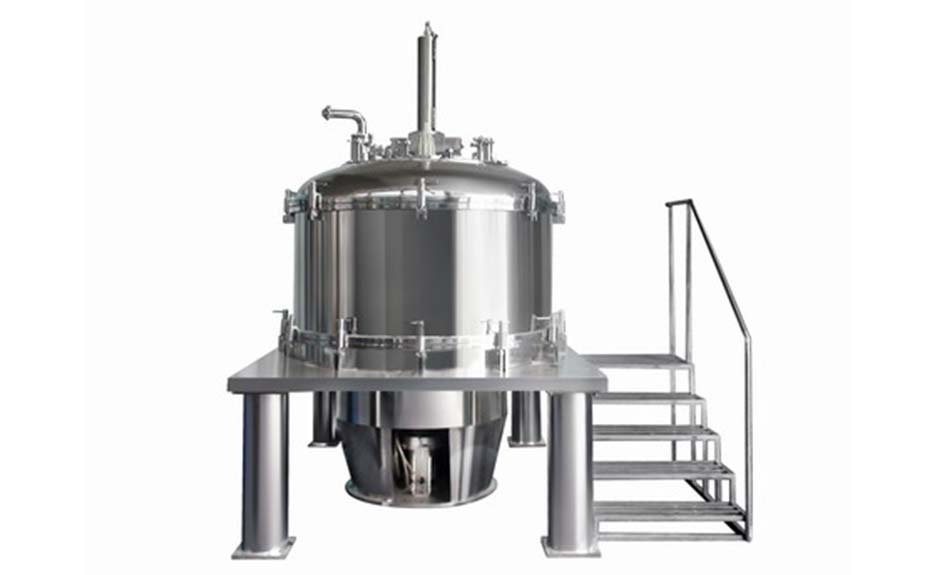
An inverting centrifuge uses a different discharge concept. SAIDELI's FW Inverting Centrifuge turns the filter cloth during discharge, allowing the retained cake to be removed without relying on conventional scraping directly against the cake layer. This design can help reduce crystal damage and minimize residual material.
A centrifuge is not always the only solution. Other technologies include filter presses, Nutsche filters, and rotary vacuum filters.
For example, the Nutsche filter working principle relies on pressure or vacuum filtration through a filter medium, with solids retained as a cake. A rotary vacuum filter uses a continuously rotating filter drum and vacuum to draw liquid through the filter medium.
The choice between centrifugation and filtration depends on solids concentration, particle characteristics, desired moisture, throughput, washing requirements, and automation.
For large-scale applications, centrifugation can provide rapid separation because centrifugal force accelerates particle movement compared with gravity-based settling.
When choosing an industrial centrifuge machine supplier, buyers should evaluate more than the equipment price.
Consider:
1. Application experience – Does the supplier understand your material and industry?
2. Capacity range – Can the equipment meet your required production rate?
3. Material compatibility – Are wetted parts suitable for the process chemistry?
4. Automation – Is automatic feeding, washing, discharge, and control required?
5. Cleaning – Is CIP or another cleaning solution necessary?
6. Safety – Are explosion-proof or hermetically sealed designs required?
7. After-sales service – Does the supplier provide commissioning and technical support?
8. Testing – Can the supplier conduct material testing before final selection?
SAIDELI has more than 70 years of manufacturing history and offers multiple industrial centrifuge designs for different process requirements.
A centrifuge is used to accelerate separation between solids and liquids, liquids with different densities, or other components of a mixture. Industrial applications include pharmaceutical processing, chemical production, food processing, environmental treatment, and new energy materials.
The machine rotates the mixture at high speed. Centrifugal force drives denser solids outward, while the liquid is separated through a filter medium or discharged through a sedimentation path.
A continuous centrifuge feeds and discharges material during operation, making it suitable for high-throughput production. A batch centrifuge processes a defined quantity during each cycle and is often preferred when flexibility or controlled batch processing is required.
Capacity depends on material properties, feed concentration, particle size, viscosity, filterability, drum dimensions, rotational speed, cake thickness, and discharge design.
A pharmaceutical centrifuge is designed for separation processes used in pharmaceutical manufacturing, such as API crystal recovery, washing, dewatering, and solid-liquid separation. Equipment design may emphasize containment, cleanability, and contamination control.
Yes. A pusher centrifuge is specifically designed for continuous feeding, separation, cake washing when required, and continuous solid discharge. It is particularly suitable for materials with appropriate particle size and concentration.
So, what is a centrifuge? It is a mechanical separation machine that uses controlled centrifugal force to accelerate the separation of materials according to density, particle characteristics, or phase behavior.
For industrial applications, the right machine depends on much more than speed. Industrial centrifuge capacity, feed properties, required moisture, discharge method, cleaning requirements, and production continuity all influence equipment selection.
From continuous horizontal centrifuges and pusher centrifuges to vertical peeler and inverting centrifuges, different designs solve different separation challenges. For pharmaceutical, chemical, food, environmental, and new energy applications, working with an experienced manufacturer such as SAIDELI can help users match centrifuge configuration with actual process requirements.