 EN
EN
 ko
ko  vi
vi  ru
ru  tr
tr  fr
fr  es
es  it
it  kk
kk  id
id 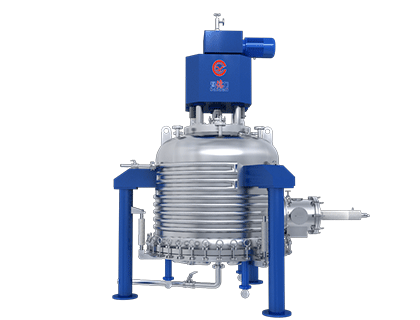
Tel:
0086-523-848088860086-18861028088


Filtration is a fundamental separation step in pharmaceutical, chemical, food, environmental, and other process industries. When a solid-liquid mixture cannot be efficiently separated by gravity alone, manufacturers can apply pressure, vacuum, centrifugal force, or mechanical filtration to accelerate liquid removal.
This raises several important questions: what is a pressure filter, what is a Nutsche filter, and how does a pressure-based system differ from a rotary drum or centrifugal filter?
The answer depends largely on the material being processed and the required filtration method. A pressure filter forces liquid through a filter medium by applying positive pressure, while a vacuum filter uses pressure below atmospheric pressure to draw liquid through the medium. A centrifuge uses centrifugal force, and some systems combine filtration with washing, drying, or mechanical cake discharge.
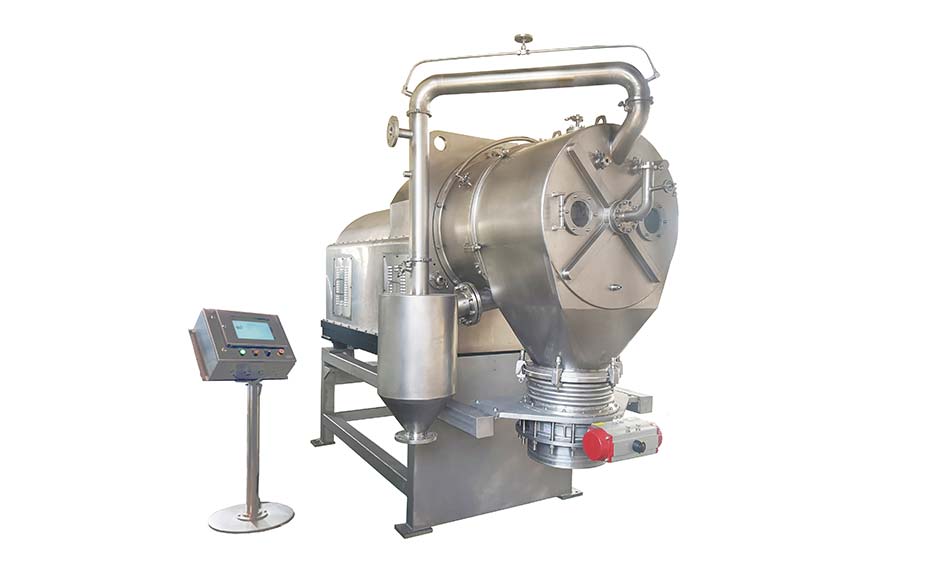
SAIDELI supplies industrial filtration and separation equipment, including Nutsche filters, vertical filter presses, continuous rotary drum pressure filters, centrifuges, and other process equipment. Its portfolio makes it possible to select different filtration technologies according to throughput, cake characteristics, washing requirements, and process conditions.
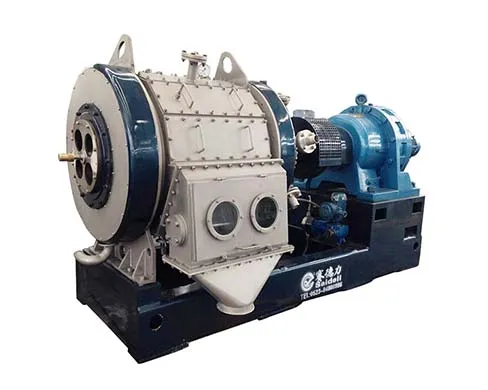
A pressure filter is a filtration system in which positive pressure is applied to a slurry to force liquid through a filter medium while retaining suspended solids.
The basic process is:
Slurry Feed → Pressure Application → Liquid Passes Through Filter Medium → Solid Cake Retained → Cake Discharge
Unlike vacuum filtration, which draws liquid through the filter using a pressure differential below atmospheric pressure, pressure filtration pushes the liquid through the filtration medium.
Pressure filtration can be useful when the process requires:
High solids recovery
Low residual moisture
Controlled cake formation
Closed processing
High filtration pressure
Effective washing
Automated operation
The specific pressure level, filter medium, cake thickness, and filtration cycle depend on the equipment design and material characteristics.
The primary distinction is how the pressure differential is generated.
Feature | Pressure Filter | Vacuum Filter |
Driving force | Positive pressure | Vacuum |
Liquid movement | Pushed through medium | Drawn through medium |
Typical operation | Batch or continuous | Often continuous |
Cake formation | Controlled by pressure | Controlled by vacuum and drum rotation |
Closed processing | Well suited | Depends on design |
Typical applications | Chemical, pharmaceutical, fine chemicals | Wastewater, minerals, food, chemicals |
The correct choice depends on slurry properties, required throughput, cake permeability, and the desired moisture content.
A Nutsche filter is a batch filtration vessel in which a slurry is held above a horizontal filter medium. Liquid passes through the filter medium while solids remain on the surface and form a filter cake.
A typical Nutsche filter diagram can be represented as:
Slurry Inlet
↓
Filter Cake
↓
Filter Medium / Support Plate
↓
Filtrate Outlet
Depending on the design, a Nutsche filter can also perform cake washing, pressure drying, vacuum drying, and mechanical cake discharge.
This makes it particularly valuable for processes where filtration and downstream cake treatment need to occur in a controlled vessel.
The Nutsche filter working principle is relatively straightforward.
First, the slurry enters the vessel. The solid particles are retained on the filter medium, forming a cake. Liquid passes through the filter medium and exits through the filtrate outlet.
After filtration, the cake can be washed to remove impurities or residual mother liquor. Some Nutsche systems can then apply pressure or vacuum to further reduce moisture.
This multi-stage capability is one reason Nutsche filters are widely considered for pharmaceutical and fine chemical processing.
For pharmaceutical production, equipment must be designed and maintained according to appropriate manufacturing controls. The FDA notes that manufacturing equipment should be suitable for its intended use and designed to facilitate cleaning and maintenance.
A pressure Nutsche filter is a Nutsche vessel that uses positive pressure above the slurry or filter cake to accelerate filtration.
The pressure Nutsche filter can provide several process functions in one enclosed vessel:
Filtration
Cake washing
Pressure dewatering
Controlled discharge
Potential drying, depending on design
This can reduce the need to transfer wet cake between separate machines.
For pharmaceutical and high-purity applications, enclosed processing can also help reduce exposure to the surrounding environment and limit product contamination risks.
A rotary drum filter is a continuous filtration machine that uses a rotating cylindrical drum covered with a filter medium.
So, what is rotary drum filter technology designed to achieve?
Its primary purpose is continuous solid-liquid separation. As the drum rotates through the slurry, solids accumulate on the filter surface while filtrate passes through the filter medium.
A typical rotary drum filter diagram can be simplified as:
Slurry Tank
↓
Rotating Filter Drum
↓
Filter Cake Formation
↓
Cake Washing / Dewatering
↓
Cake Discharge
The exact design varies according to whether the machine operates under vacuum, pressure, or another filtration mechanism.
The rotary vacuum filter working principle uses a rotating drum divided into filtration sections.
In a typical vacuum system, the vacuum is applied inside the rotary drum filter. As the drum rotates through the slurry, pressure below atmospheric level draws liquid through the filter medium.
The basic sequence is:
Immersion → Filtration → Cake Formation → Washing → Dewatering → Cake Discharge
Because the drum continuously rotates, filtration and cake discharge can take place continuously.
A continuous rotary vacuum filter is therefore attractive for large-volume applications where uninterrupted processing is important.
The continuous rotary filter maintains a continuous filtration cycle rather than requiring operators to stop the machine between batches.
Depending on the design, different sections of the drum can perform different functions as they rotate:
Slurry immersion
Filtration
Cake washing
Drying or dewatering
Cake discharge
This makes rotary filtration particularly suitable for processes where large quantities of slurry must be handled continuously.
The drum filter working process depends on the pressure differential across the filter medium.
During operation, the rotating drum partially enters the slurry. Solids accumulate on the drum surface while filtrate moves through the filter medium.
The rotary drum filter application can include:
Chemical processing
Mineral processing
Food processing
Wastewater treatment
Industrial water treatment
Pulp and paper
Sludge separation
The final equipment selection should consider slurry concentration, particle size, cake permeability, required filtration rate, and cake moisture.
A suitable rotary drum filter design needs to account for:
Drum diameter
Filtration area
Drum speed
Filter medium
Vacuum or pressure level
Cake thickness
Cake discharge method
Slurry characteristics
Washing requirements
A larger filtration area does not automatically mean better performance. If the cake is poorly permeable or the slurry contains very fine particles, increasing drum size alone may not solve the separation problem.
A rotary pressure filter combines continuous drum rotation with positive pressure filtration.
Compared with a conventional vacuum drum filter, the pressure-driven configuration can operate under higher pressure differentials, potentially improving filtration rates for certain difficult slurries.
A pressure drum filter can be considered when continuous processing is required but vacuum filtration is insufficient for the target separation.
The main differences can be summarized as follows:
Equipment | Driving Force | Operation | Typical Strength |
Rotary vacuum filter | Vacuum | Continuous | Large-volume filtration |
Rotary pressure filter | Positive pressure | Continuous | Higher pressure filtration |
Nutsche filter | Pressure/vacuum | Batch | Filtration + washing |
Centrifugal filter | Centrifugal force | Batch/continuous | Rapid separation and dewatering |
The centrifugal filter working principle differs from both pressure and vacuum filtration.
Instead of relying primarily on an external pressure source or vacuum, the rotating basket generates centrifugal force. This force drives liquid through the filter medium while solids remain on the basket.
A centrifugal separator filter can therefore provide rapid solid-liquid separation and dewatering.
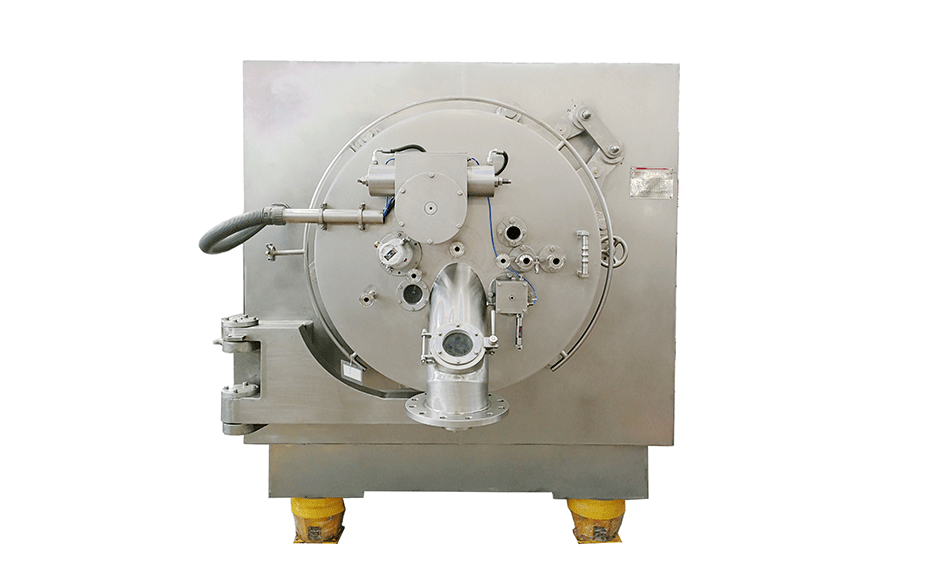
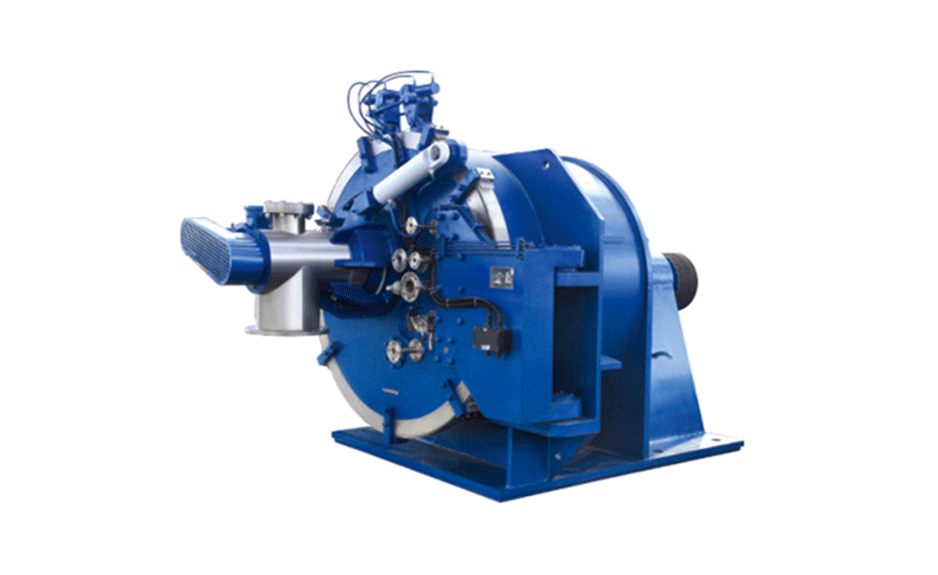
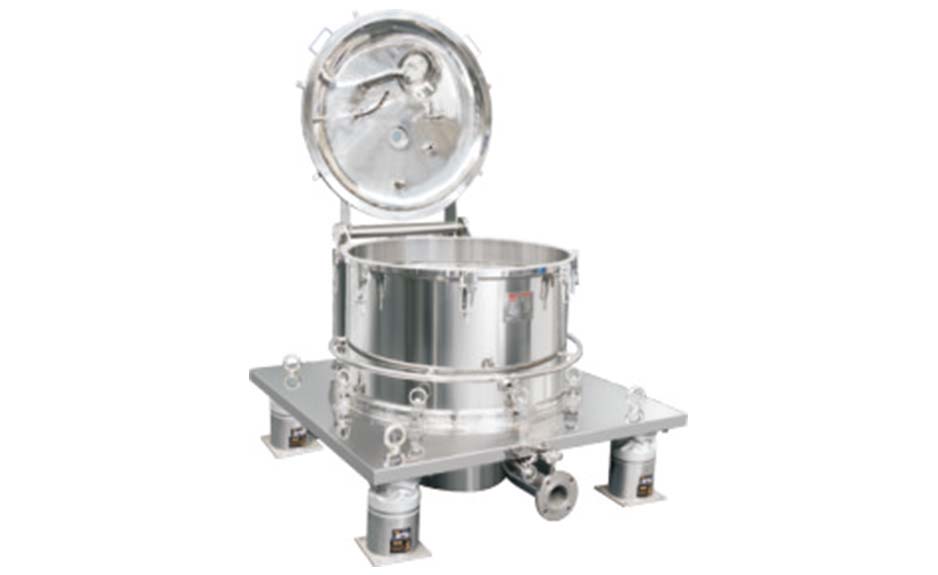
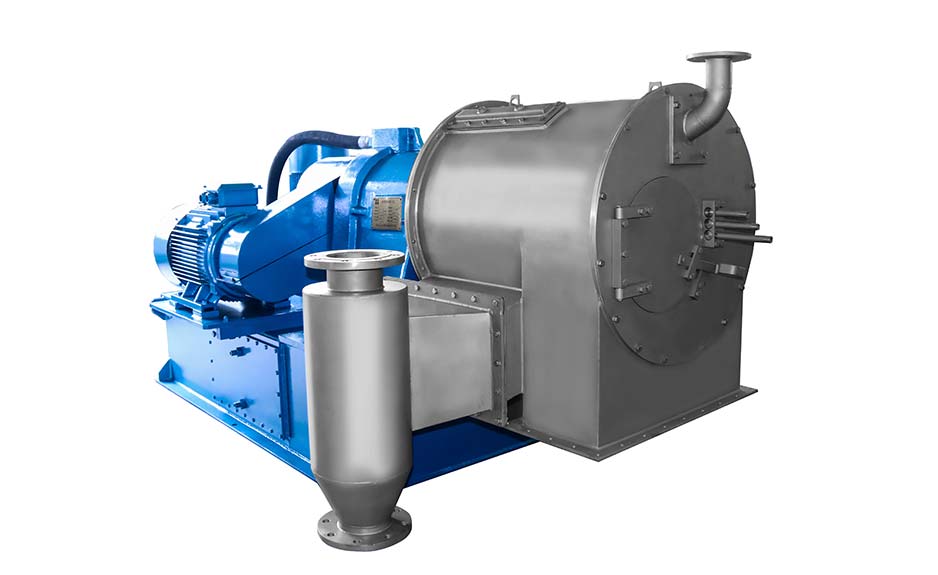
SAIDELI offers several centrifuge configurations, including filtration centrifuges and inverting filter centrifuges, for applications where controlled solid-liquid separation, washing, and product recovery are required.
An inverting filter centrifuge can discharge the retained cake by inverting the filter basket rather than relying on a conventional scraper. This can be advantageous for certain sensitive or high-value products.
Filtration equipment and filter media used in pharmaceutical processes require appropriate control because filter failure can compromise product quality.
A filter integrity test is a test used to verify that a sterilizing-grade or critical filter remains intact and capable of performing its intended function. In aseptic pharmaceutical manufacturing, filtration can be a critical step for controlling microbial contamination, so filter performance and integrity need to be appropriately controlled.
Common integrity-testing methods include:
Bubble point testing
Diffusion testing
Pressure hold testing
Water intrusion testing for suitable hydrophobic filters
The European Medicines Agency's guidance on sterilisation provides requirements relevant to sterile medicinal product manufacturing and emphasizes appropriate validation and control of sterilization processes.It is important to distinguish filter integrity testing from industrial cake filtration. A filter integrity test evaluates the condition and integrity of a critical filter, whereas equipment such as a Nutsche filter or rotary drum filter performs the actual separation of solids and liquids.
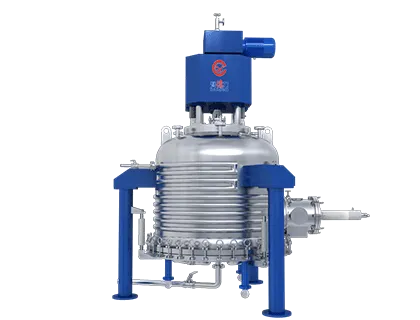
When evaluating a rotary drum filter for sale, pressure filter, or centrifugal filtration system, buyers should first define the process requirements.
Consider:
1. Feed composition
2. Solid concentration
3. Particle size
4. Slurry viscosity
5. Cake permeability
6. Required throughput
7. Target cake moisture
8. Washing requirements
9. Batch or continuous operation
10. Material compatibility
11. Cleaning requirements
12. Discharge method
For pharmaceutical applications, cleanability, containment, product recovery, and material compatibility can be particularly important.
For high-throughput industrial applications, a continuous rotary vacuum filter or pressure drum system may be preferable. For controlled pharmaceutical batches, a Nutsche filter or filtration centrifuge may provide greater process flexibility.
SAIDELI's combination of centrifuge and filtration equipment allows users to compare different solid-liquid separation technologies according to their process requirements.
A pressure filter is a filtration machine that uses positive pressure to force liquid through a filter medium while retaining solids as a filter cake.
A Nutsche filter is a batch filtration vessel in which solids are retained on a horizontal filter medium. Depending on its design, it can also perform cake washing, dewatering, drying, and discharge.
The slurry enters the vessel and solids accumulate on the filter medium while liquid passes through. Pressure or vacuum can then be applied to accelerate filtration and dewatering.
A rotary drum filter is a continuous filtration machine using a rotating cylindrical drum covered with a filter medium. It separates solids from liquids as the drum rotates through the slurry.
A vacuum is applied to the inside of the rotating drum. As the drum passes through the slurry, the pressure differential draws liquid through the filter medium and forms a solid cake on the drum surface.
A Nutsche filter normally operates in batches and offers controlled filtration and cake treatment, while a rotary drum filter is designed for continuous filtration and high-volume processing.
A centrifugal filter uses centrifugal force generated by a rotating basket to drive liquid through a filter medium while retaining solids. It can provide rapid filtration and dewatering.
Pressure filters, Nutsche filters, rotary drum filters, and filtration centrifuges all perform solid-liquid separation, but they use different driving forces and operating mechanisms.
A pressure filter uses positive pressure, a rotary vacuum filter uses a vacuum pressure differential, a Nutsche filter provides controlled batch filtration, and a centrifugal filter relies on centrifugal force. Understanding the centrifugal filter working principle makes it easier to select the right technology for a specific process.
For continuous high-volume applications, rotary drum or pressure filtration may be appropriate. For pharmaceutical and fine chemical processes requiring controlled washing, enclosed processing, and product recovery, Nutsche filters or inverting filter centrifuges can offer valuable advantages.
With its range of industrial separation equipment, SAIDELI provides multiple options for manufacturers looking to optimize filtration, dewatering, and solid-liquid separation processes.