 EN
EN
 ko
ko  vi
vi  ru
ru  tr
tr  fr
fr  es
es  it
it  kk
kk  id
id 
Tel:
0086-523-848088860086-18861028088


In chemical, pharmaceutical, food, environmental, and new energy production, many materials exist as suspensions, slurries, wet crystals, or mixed liquid-solid systems. These materials cannot always be separated efficiently by natural settling or simple filtration. A centrifuge solves this problem by using high-speed rotation to accelerate separation.
When a centrifuge rotates, heavier solid particles move outward under centrifugal force, while the liquid phase moves inward or passes through a filter medium. This makes centrifuges one of the most important machines for industrial solid-liquid separation, especially when production requires higher capacity, lower moisture, better product recovery, or cleaner filtrate.
Understanding how centrifuges separate solids from liquids helps buyers choose the right machine type, evaluate operating performance, and avoid common problems such as poor dewatering, cake cracking, excessive crystal breakage, or unstable discharge.
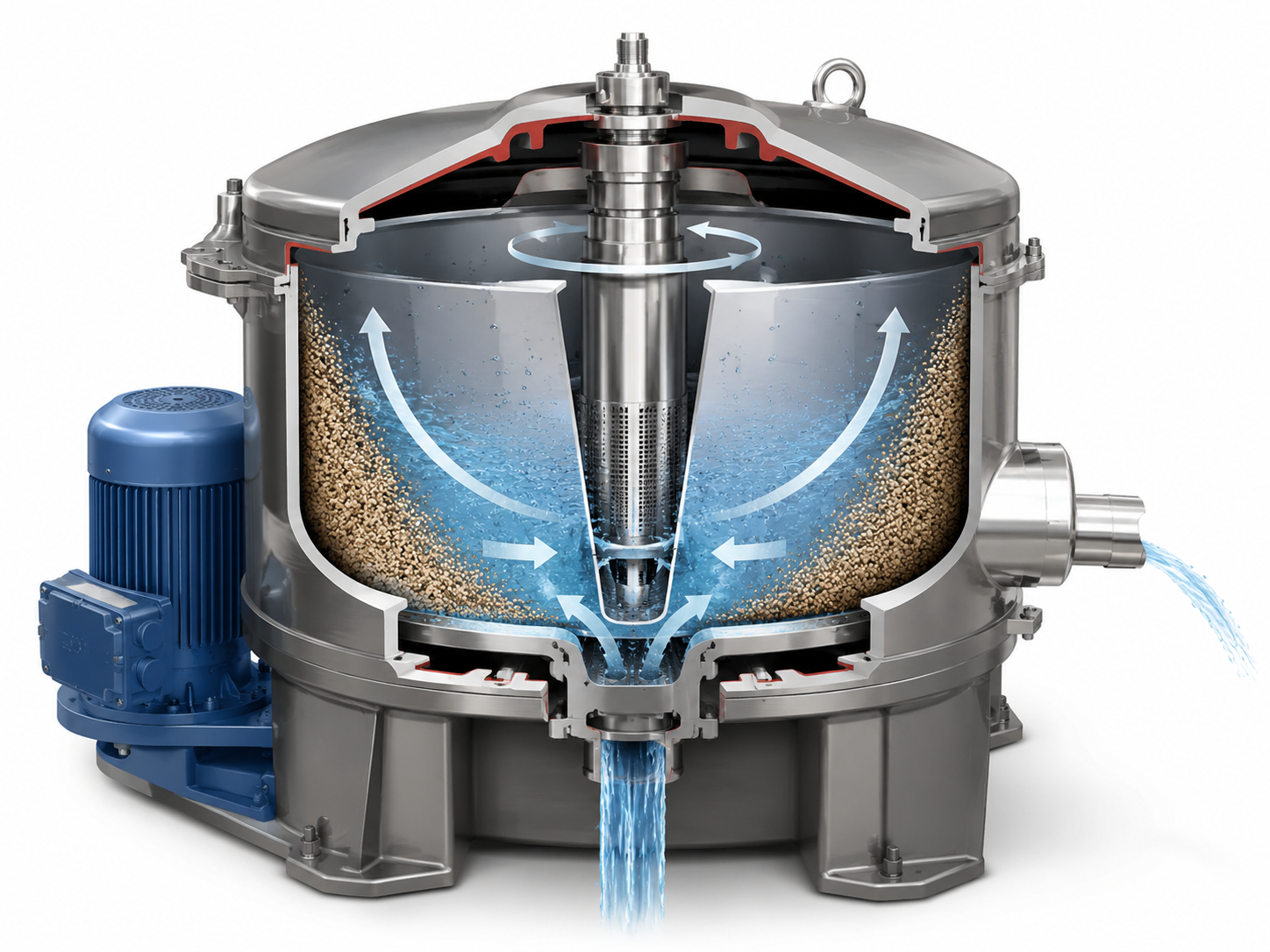
A centrifuge separates materials based on density difference, particle size, phase difference, and movement under centrifugal force. In solid-liquid separation, the denser solid particles move toward the outside of the rotating basket, bowl, or drum, while the liquid phase is removed through filtration, sedimentation, or discharge channels.
A centrifuge for solid liquid separation is commonly used for:
· Separating crystals from mother liquor
· Dewatering wet solids
· Clarifying process liquid
· Recovering valuable solids
· Removing sludge from wastewater
· Washing filter cakes
· Preparing materials for drying or packaging
For industrial users, a solid liquid separation centrifuge is not only a separation machine. It is often part of a complete production process involving crystallization, reaction, washing, drying, conveying, and packaging.
The core industrial centrifuge working principle is simple: rotation creates centrifugal force. This force is much stronger than gravity, so separation happens faster and more efficiently.
In a typical centrifuge, the material enters through a feed pipe and is distributed into a rotating basket or bowl. As the machine spins, solids move outward and form a cake layer. The liquid phase either passes through a filter medium or flows out through a liquid discharge path.
The exact working process depends on the centrifuge type. A filtration centrifuge uses filter cloth or screen to retain solids. A sedimentation centrifuge separates materials mainly by density difference without relying on a filter medium.
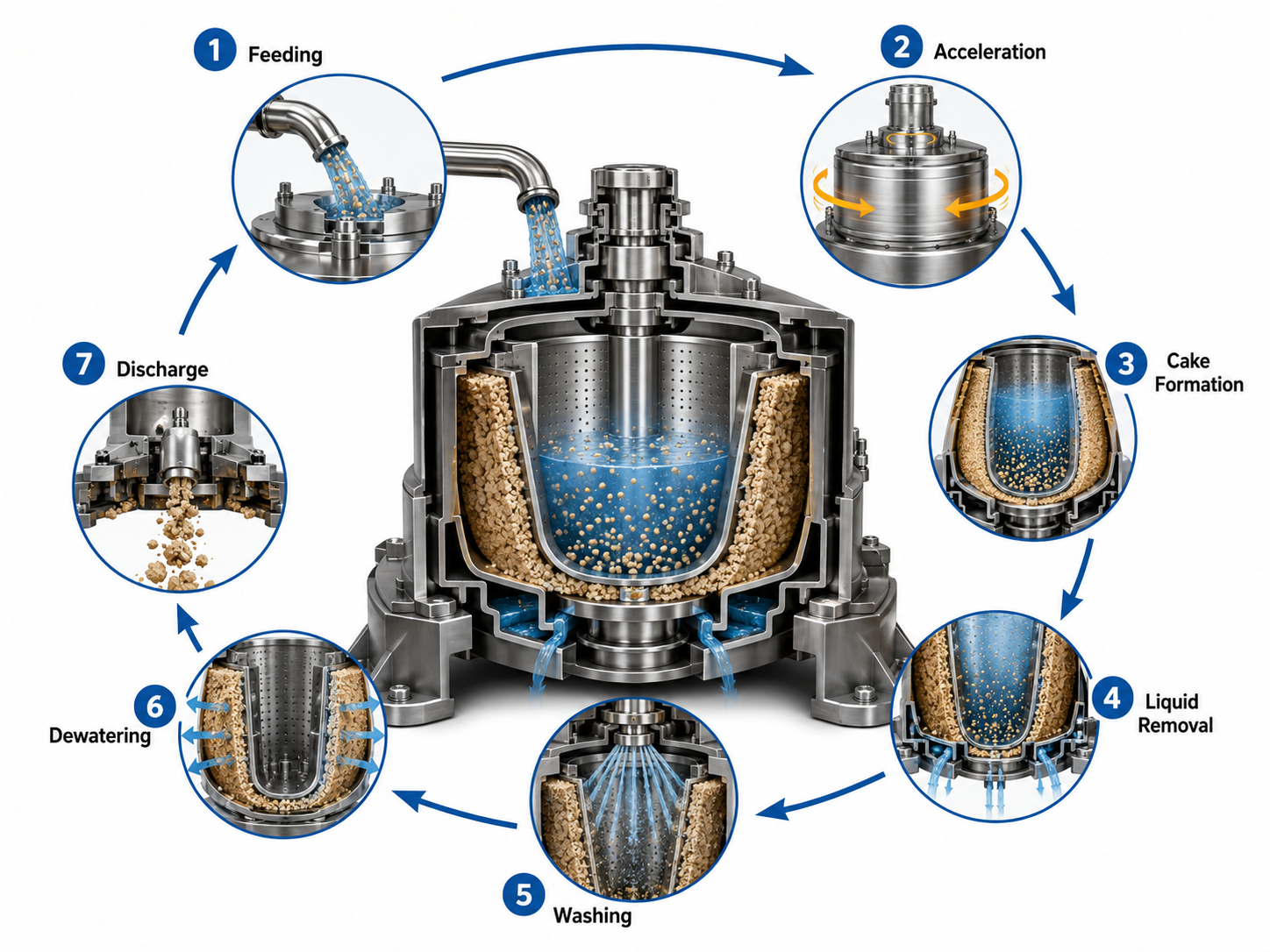
Step | What Happens Inside the Centrifuge | Why It Matters |
Feeding | Slurry or suspension enters the rotating basket, bowl, or drum | Determines load stability and separation consistency |
Acceleration | Material reaches the rotating speed of the centrifuge | Creates centrifugal force for separation |
Cake Formation | Solids move outward and form a filter cake or sediment layer | Affects moisture content and solid recovery |
Liquid Removal | Liquid passes through filter cloth or exits through discharge channels | Determines filtrate clarity and process efficiency |
Washing | Wash liquid removes impurities or mother liquor from the solid cake | Improves product purity |
Dewatering | Additional spinning reduces final moisture | Reduces downstream drying cost |
Discharge | Solids are discharged by pusher, scraper, gravity, or cloth inversion | Affects product integrity and automation level |
A well-designed centrifugal separator working principle should match the material’s particle size, viscosity, solid concentration, and required final moisture.
Particle size has a major influence on separation speed. Larger and heavier particles usually separate more easily. Fine particles may require longer residence time, better filter media, or a different centrifuge design.
High solid concentration can improve cake formation, but it may also increase load, vibration, and discharge difficulty. Low solid concentration may require longer processing time or larger equipment capacity.
High-viscosity liquids are harder to remove from the solid cake. In these cases, filtration speed, washing efficiency, and final moisture should be carefully tested before selecting a centrifuge.
Some crystals are fragile and may break if exposed to aggressive scraping or pushing. For these materials, discharge method and rotation speed should be carefully evaluated.
If the process requires very low final moisture, the centrifuge must provide enough filtration area, dewatering time, spin speed, and discharge control.
Different centrifuges are designed for different material behaviors and production goals.
A pusher centrifuge is suitable for continuous separation of coarse crystals and high-solid-content slurry. The solid cake is pushed forward continuously while liquid passes through the screen. This makes pusher centrifuge working suitable for large-scale chemical, salt, fertilizer, and food processing applications.
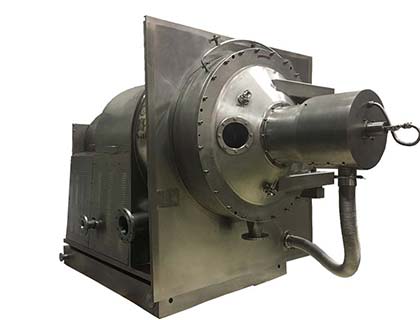
A peeler centrifuge is suitable for batch filtration, cake washing, and scraper discharge. It is commonly used in fine chemical and pharmaceutical production where washing effect, purity, and controlled discharge are important.
A basket centrifuge is a common batch separation machine. It is suitable for general solid-liquid separation where simple operation and flexible batch processing are required.
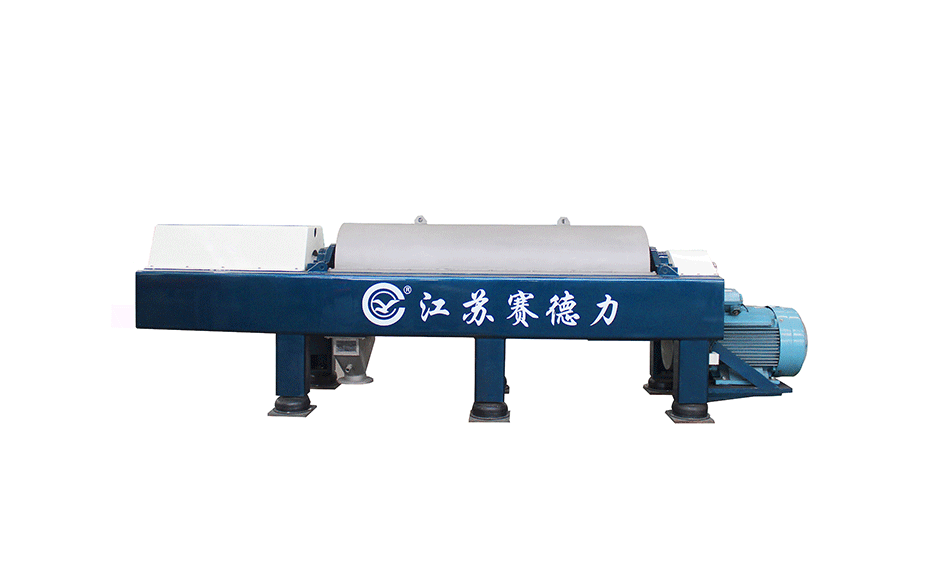
A decanter centrifuge is suitable for sludge, wastewater, and high-volume slurry. It separates solids and liquids continuously by sedimentation rather than filter cloth.
An inverting centrifuge is suitable for applications that require cleaner cake discharge and reduced product residue. It is often used when product recovery and cleanliness are important.
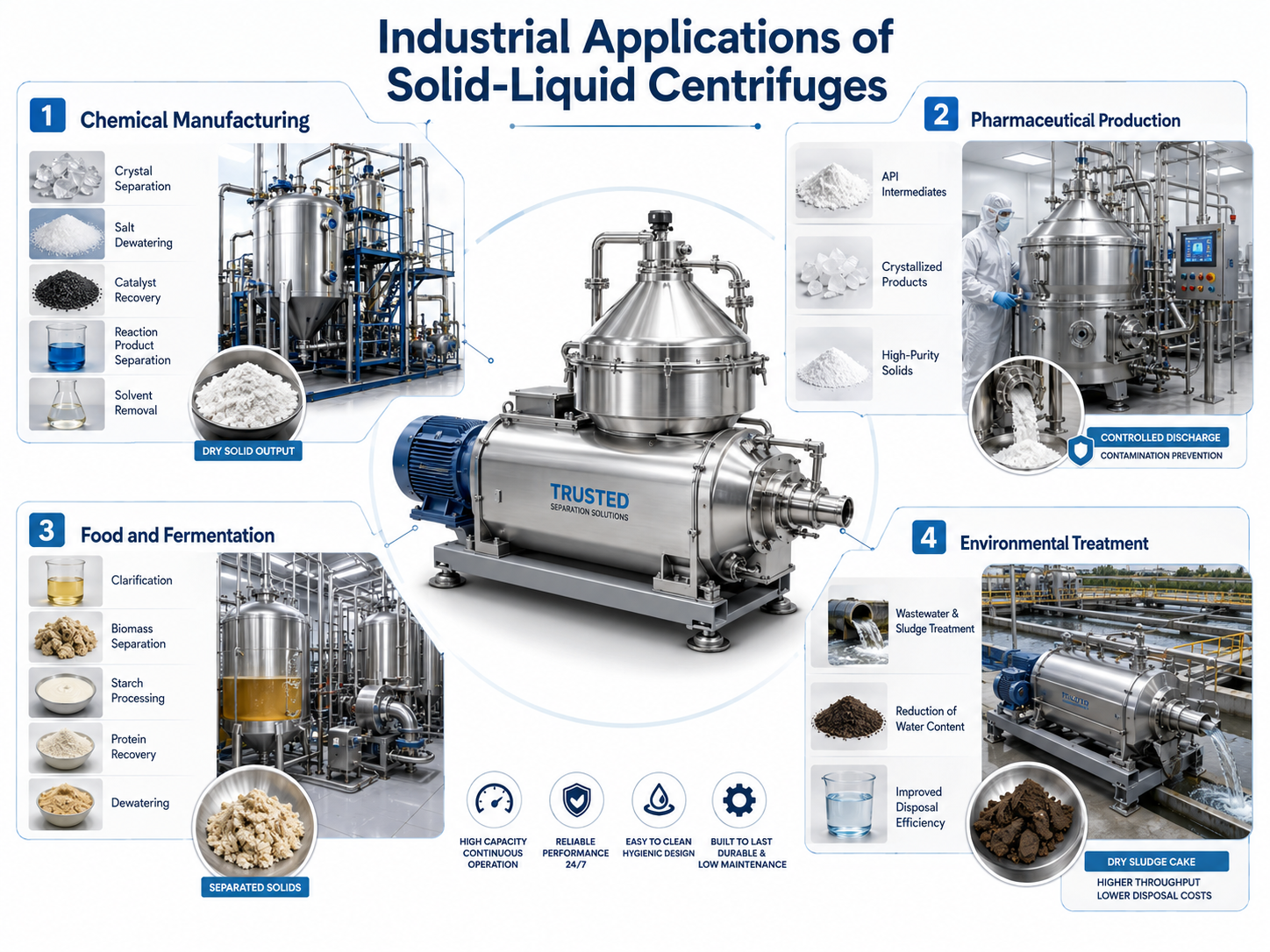
In chemical production, centrifuges are used for crystal separation, salt dewatering, catalyst recovery, reaction product separation, and solvent removal. A centrifuge separator machine helps reduce moisture and prepare solids for drying.
In pharmaceutical production, centrifuges are used for API intermediates, crystallized products, and high-purity solids. These applications often require enclosed structure, cleanable surfaces, controlled discharge, and contamination prevention.
Food and fermentation processes use centrifuges for clarification, biomass separation, starch processing, protein recovery, and dewatering.
Wastewater and sludge treatment often require centrifugal separation to reduce water content and improve disposal efficiency. In these applications, durability, high throughput, and stable continuous operation are important.
Selection Requirement | Recommended Focus | Suitable Centrifuge Type |
Continuous high-capacity separation | Stable feeding, continuous discharge, strong screen design | Pusher centrifuge |
High product purity | Cake washing, enclosed structure, controlled discharge | Peeler centrifuge |
General batch separation | Simple operation and broad material adaptability | Basket centrifuge |
Low cake residue | Clean discharge and product recovery | Inverting centrifuge |
Sludge and wastewater processing | Continuous sedimentation and high throughput | Decanter centrifuge |
Fine chemical separation | Washing effect, discharge control, corrosion resistance | Horizontal or vertical peeler centrifuge |
When selecting centrifugal separation equipment, buyers should not only compare machine size. Material testing, separation target, moisture requirement, washing performance, and operating cost should all be considered.
Because centrifuges rotate at high speed, safe operation is critical. Operators should inspect the machine before use, avoid unbalanced feeding, check filter cloth and screen conditions, and stop the machine if abnormal vibration or noise occurs.
Important operating points include:
· Avoid overfeeding
· Maintain stable feed concentration
· Inspect rotating parts regularly
· Replace worn filter cloth or screen
· Monitor vibration and bearing temperature
· Follow cleaning and maintenance schedules
· Confirm sealing requirements for solvents or hazardous materials
A centrifuge separates solids from liquids by spinning the material at high speed. Heavier solids move outward under centrifugal force, while liquid passes through a filter medium or exits through a discharge channel.
Solid-liquid separation in a centrifuge means separating solid particles from a liquid phase. It is used for crystal recovery, slurry dewatering, sludge treatment, and product washing.
The best choice depends on the material. Pusher centrifuges are suitable for coarse crystals and continuous operation. Peeler centrifuges are suitable for batch washing and controlled discharge. Decanter centrifuges are suitable for sludge and high-volume slurry.
Particle size, solid concentration, liquid viscosity, cake thickness, filter media, rotation speed, washing time, and discharge method all affect separation efficiency.
Yes. A centrifuge can reduce final moisture by removing liquid from the solid cake during high-speed rotation. Final moisture depends on material properties, filtration speed, spin time, and centrifuge design.
A filtration centrifuge uses filter cloth or screen to retain solids while liquid passes through. A sedimentation centrifuge separates phases by density difference without mainly relying on filter media.# Markdown syntax guide